


Unlock Biotin Its Functions and Wide Applications
Biotin (Vitamin B7): A Comprehensive Guide from Basics to Scientific Applications
Biotin, also known as vitamin B7 or vitamin H, is a water-soluble member of the B-vitamin family. First isolated from egg yolk in 1936, it is classified as a coenzyme-type nutrient because of its role in numerous carboxylase reactions. The human body cannot synthesize biotin on its own; it must be obtained through diet or produced by intestinal microbiota.
1. What Is Biotin?
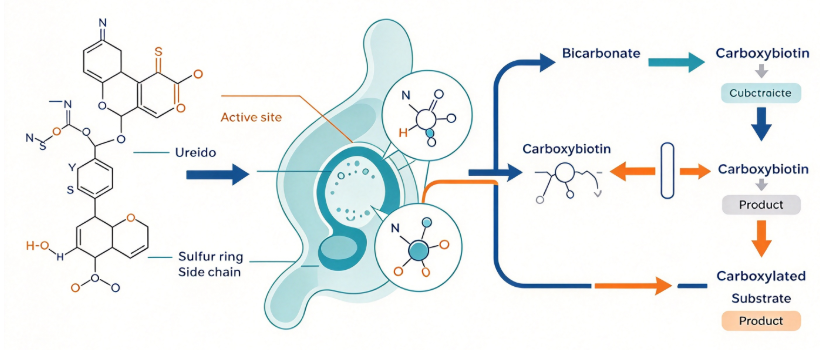
In the body, biotin binds covalently to carboxylase enzymes and serves as a carboxyl carrier in four key carboxylation reactions: acetyl-CoA carboxylase (fatty acid synthesis), pyruvate carboxylase (gluconeogenesis), propionyl-CoA carboxylase (amino acid metabolism), and β-methylcrotonyl-CoA carboxylase (leucine breakdown). These reactions are central to energy metabolism, fat synthesis, and amino acid catabolism.
2. Benefits of Biotin
1. Maintaining skin, hair, and nail health
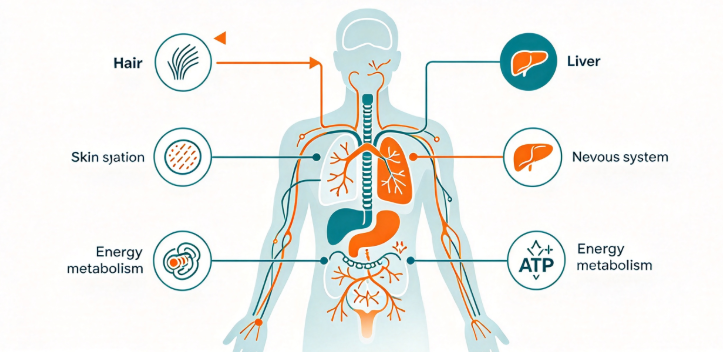
Biotin participates in keratin synthesis and is an essential factor for normal keratinization of hair follicles and nail beds. Clinical observations show that biotin deficiency often presents with hair loss, erythematous dermatitis, and brittle nails. Biotin supplementation can improve brittle nail syndrome, although high-quality evidence for a "hair-growth" effect in healthy individuals is still lacking.
2. Supporting energy metabolism
As a carboxylase cofactor, biotin directly participates in the metabolic conversion of glucose, fatty acids, and amino acids, helping the body convert food into usable energy and maintain blood glucose homeostasis.
3. Maintaining nervous system function
Biotin is involved in myelin synthesis and neurotransmitter metabolism. Severe deficiency can lead to neurological symptoms such as depression, lethargy, hallucinations, and paresthesia.
4. Pregnancy support
Biotin requirements increase during pregnancy, and mild deficiency may be associated with fetal development. The U.S. National Institutes of Health recommends that pregnant women pay attention to biotin intake under medical guidance.
3. Applications of Biotin
1. Clinical nutrition and treatment of deficiency
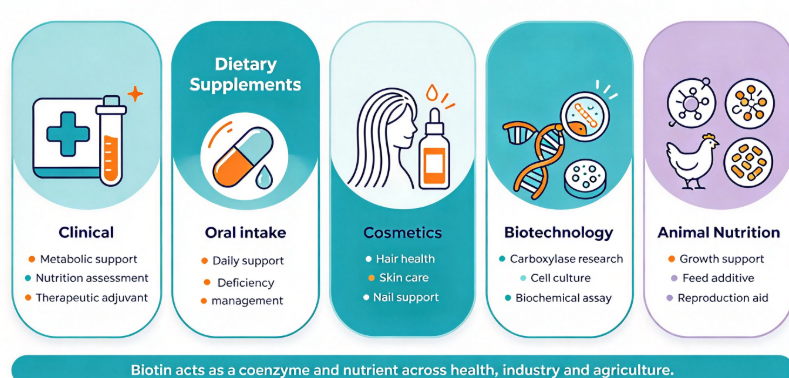
Used to treat biotin deficiency (manifesting as dermatitis, hair loss, conjunctivitis, and neurological symptoms) and as nutritional supplementation for patients on long-term parenteral nutrition. Patients with congenital biotinidase deficiency require lifelong supplementation.
2. Dietary supplements
Commercial biotin supplements are widely used in hair, skin, and nail care products, often combined with zinc, collagen, and other ingredients. Note: The FDA has warned that high-dose biotin (>5 mg/day) can interfere with thyroid function tests and cardiac troponin assays, leading to misdiagnosis.
3. Cosmetics and personal care
Biotin is added to shampoos, conditioners, and nail care products as a functional ingredient for "strengthening" claims, but transdermal absorption efficiency is limited, and topical effects are weaker than oral intake.
4. Biotechnology research
The biotin-avidin system is a classic tool in molecular biology. Leveraging the high affinity between biotin and avidin/streptavidin (Kd ≈ 10⁻¹⁵ M), it is widely used in ELISA, immunohistochemistry, nucleic acid detection, and protein purification.
5. Animal nutrition
Used as a feed additive to improve poultry feather quality and increase egg production and reproductive performance.
4. Who Should Pay Attention to Biotin?
Groups recommended to monitor biotin intake include:
- Pregnant and breastfeeding women: increased requirements; mild deficiency is relatively common;
- Long-term parenteral nutrition patients: intravenous supplementation is needed;
- Patients with biotinidase deficiency: lifelong high-dose supplementation required;
- Long-term raw egg consumers: avidin in raw egg whites binds biotin and impairs absorption;
- Chronic alcohol-dependent individuals: alcohol interferes with biotin absorption and utilization;
- Long-term users of antiepileptic drugs: some drugs accelerate biotin breakdown;
- People troubled by hair loss, brittle nails, or dermatitis: evaluation for deficiency under medical guidance.
For the general healthy population, a balanced diet (egg yolk, nuts, legumes, animal liver, salmon, cauliflower, etc.) meets the recommended intake of approximately 30 μg per day, and routine supplementation is unnecessary. Consulting a physician before high-dose supplementation is advised to avoid test interference and potential drug interactions.
5. Precautions
Biotin is generally safe, and its water-soluble nature means excess is excreted in urine. However, be aware of:
① high-dose interference with laboratory tests (thyroid hormones, troponin);
② possible interactions with antiepileptic drugs;
③ variable supplement quality — choose reputable brands.


