


Ceramide - the guardian of the skin barrier
2024-12-18
Ceramide is a type of amide compound formed by dehydration of long-chain fatty acids and the amino group of sphingosine. It mainly includes ceramide phosphorylcholine and ceramide phosphorylethanolamine. Phospholipids are the main components of cell membranes. 40% to 50% of sebum in the stratum corneum is composed of ceramide. Ceramide is the main part of the intercellular matrix and plays an important role in maintaining the balance of moisture in the stratum corneum. Ceramide has a strong ability to associate with water molecules. It maintains skin moisture by forming a mesh structure in the stratum corneum. Therefore, ceramide has the function of maintaining skin moisture.

Ceramides (Cers) exist in all eukaryotic cells and play an important role in regulating life activities such as cell differentiation, proliferation, apoptosis, and aging. As the main component of intercellular lipids in the stratum corneum of the skin, ceramide not only acts as a second messenger molecule in the sphingomyelin pathway, but also plays an important role in the formation of the epidermal stratum corneum, maintaining the skin barrier, moisturizing, anti-aging, whitening, and treating diseases.
As an invisible protective umbrella for the skin, ceramide plays an important role in skin care products and skin treatments. Its main functions are as follows:
01. Moisturizing effect of ceramide
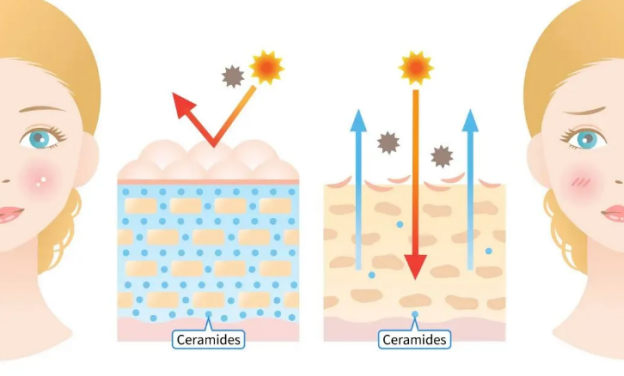
The moisturizing effect of the stratum corneum is also closely related to ceramide. Water, lipids and natural moisturizing factors (NMF) in the skin together constitute the moisturizing system of the skin to prevent water loss. In the process of keratinocytes differentiating from the basal layer to the stratum corneum, ceramide, fatty acids and free cholesterol are excreted and distributed in layers between keratinocytes to form a barrier to prevent water loss. When lipids are deficient due to various reasons, the water barrier function is weakened, and the transepidermal water loss (TEWL) will increase, resulting in dry and flaky skin. Ceramide is a highly effective moisturizer. Its structure contains a large number of hydrophilic groups, which have a good affinity for water. It can promote epidermal hydration, reduce epidermal water evaporation, enhance epidermal cell cohesion, and prevent dry and flaky skin.
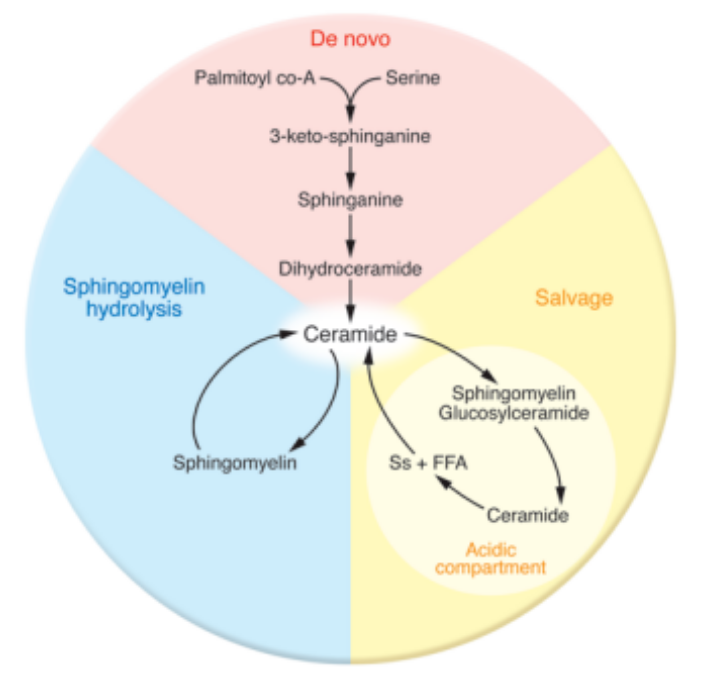
Ceramide has two long-chain hydrocarbon groups (one is the carbon chain in LCB and the other is the carbon chain in FA) and is hydrophobic. The 2-3 hydroxyl groups in LCB are hydrophilic with the amide bonds at the binding sites of FA and LCB. These two properties are of great significance for its water retention in the stratum corneum. In addition, ceramide can significantly promote the expression levels of filaggrin mRNA and protein. Among them, when filaggrin enters the stratum corneum from the granular layer, it undergoes a series of enzymatic hydrolysis and is converted into polycarboxylic acid substances, which have moisturizing effects. Filagrin is not only an important structural protein, but also the main source of moisturizing factors. Studies have shown that the moisturizing effect of ceramide is 16 times that of hyaluronic acid. It is a highly effective moisturizer that is easily absorbed by the skin and can promote the penetration of other nutrients. The moisturizing effect on elderly dry skin is as high as 80%.
02. Anti-inflammatory effects of ceramide
The lipid composition of the skin is unique to any other tissue and is distributed differently in different species and parts. The lipid distribution also changes with age. Skin lipids include triglycerides, cholesterol esters, wax esters, squalene, and keratinocyte-derived lipids (including ceramides), as well as fatty acids released after diglycerides are produced by skin resident bacteria. Keratinocyte metabolism and skin flora activity both affect skin surface lipids. Many lipids have antimicrobial functions on the skin surface, including sphingoid bases and sebum-derived saponin acids. Free fatty acids such as lauric acid, palmitic acid, and oleic acid can increase the release of antimicrobial peptides, and also synergize with antimicrobial lipids such as glucosylceramide and sphingosine, as well as antimicrobial peptides such as human β-defensin 2, to participate in the innate immunity of the skin and defend against pathogen invasion. CD300 is a leukocyte single immunoglobulin-like receptor, and CD300f is an inhibitory receptor between the activation and inhibitory receptors of CD300 family members. Experiments have shown that ceramide, as a ligand of CD300f, can inhibit IGE-mediated mast cell activation and allergic reactions in mouse models by binding to it. This experiment confirmed that ceramide interacts with CD300f and plays a key role in lipopolysaccharide-induced skin inflammation by inhibiting neutrophil accumulation.
03. Ceramide’s barrier repairing effect
Previous News: L Theanine---a compound that can soothe the mind and body
Next News: Can you be deficient in vitamin B12?


