

Stevia Reb A and Reb M The Three Brothers of Natural Sweeteners
Stevia, Reb A & Reb M: The "Three Brothers" of Natural Sweeteners
As sugar reduction becomes a global health consensus, steviol glycosides derived from the South American plant Stevia rebaudiana — with their "natural origin + zero calories + high sweetness" combination — have become star ingredients in the food and beverage industry. Yet the three names Stevia, Reb A and Reb M are often confused or used interchangeably. This article clarifies them from four angles: definition, function, application and distinction.
1. What Are They?
Stevia (Steviol Glycosides)
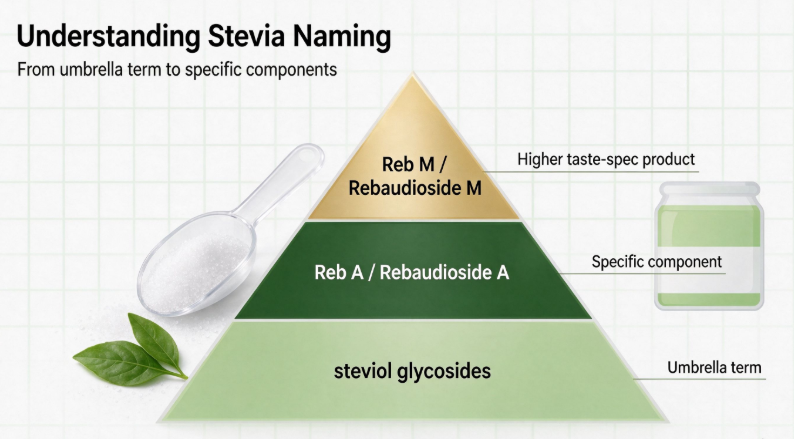
A collective name for a family of diterpene glycosides extracted from stevia leaves. Dozens of components have been identified, including Stevioside, Rebaudioside A (Reb A), and Rebaudioside C, D and M. In short, Stevia is the "surname," while Reb A and Reb M are specific "family members."
Reb A (Rebaudioside A)
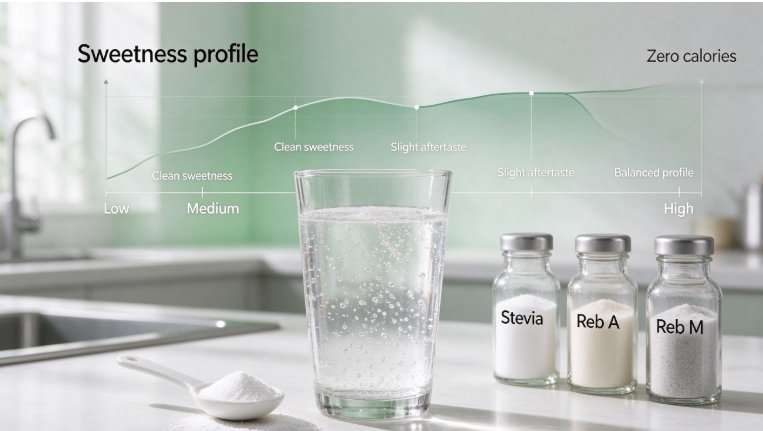
The most abundant and commercially mature single component in the family, about 200–300 times sweeter than sucrose. It is the workhorse of most "stevia" blends on the market.
Reb M (Rebaudioside M)
A rising "newcomer." Naturally present in leaves at very low levels (usually under 1%), it is 200–350 times sweeter than sucrose, with a sweetness curve closer to sugar and markedly less aftertaste. Due to the high cost of natural extraction, mainstream supply relies on biosynthesis (enzymatic/fermentation) technology.
2. Functional Characteristics
All three share the core functions of steviol glycosides: high sweetness, zero (or extremely low) calories, no blood-sugar spikes, and no cariogenic effect — suitable for diabetics and sugar-conscious consumers. Looking closer, the differences are clear:
- Sweetness: Reb A is about 200–300× sucrose; Reb M about 200–350×. They are comparable, but Reb M tastes more "like sugar."
- Flavor: Reb A tends to show after-bitterness, licorice notes and astringency at high concentrations, often requiring blending to mask; Reb M significantly reduces bitterness and aftertaste, with a faster onset and more natural decay — hailed by the industry as "the steviol glycoside closest to sucrose."
- Stability: Both are heat- and acid/alkali-resistant, suitable for baking, beverages and other conventional processing; Reb M performs better in solubility and flavor stability in some systems.
- Solubility: Both are white to off-white powders with good water solubility; high-purity Reb A dissolves slightly more slowly.
3. Main Applications
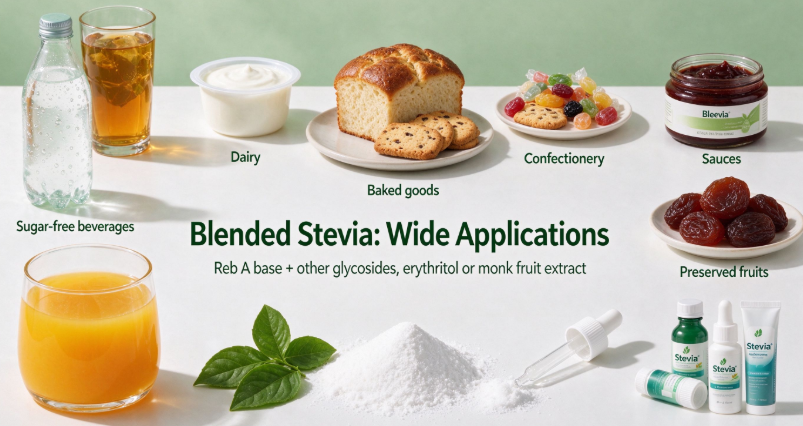
Stevia (blended forms) has the widest application — sugar-free beverages, dairy products, baked goods, confectionery, sauces, preserved fruits and oral care products. It usually takes Reb A as the base, blended with other glycosides, erythritol or monk fruit extract to optimize taste.
Reb A is the most commercialized single product, widely used in carbonated drinks, tea beverages, juices, yogurt, meal replacements, condiments and tabletop sweeteners. With controllable cost and a mature supply chain, it is the first choice for most "zero-sugar" products.
Reb M targets premium and "taste-sensitive" applications: high-end sugar-free drinks, specialty coffee mixes, low-sugar dairy, functional foods, children's foods and scenarios with zero tolerance for after-bitterness. As biosynthesis reduces costs, Reb M is moving from "luxury" to scale, often blended with Reb A and erythritol to balance cost and taste.
4. How to Distinguish Them
In one sentence: Stevia is the umbrella term, Reb A is the cost-effective mainstay, and Reb M is the premium taste leader.
| Dimension | Stevia (Umbrella) | Reb A | Reb M |
|---|---|---|---|
| Definition | Collective term for steviol glycoside blends | Single component, most abundant | Single component, naturally very low |
| Sweetness (vs sucrose) | Varies by composition | About 200–300× | About 200–350× |
| Taste | Depends on the blend | Noticeable after-bitterness/licorice | Closest to sucrose, low bitterness |
| Source | Stevia leaf extraction | Mainly natural extraction | Mainly biosynthesis/enzymatic |
| Cost | Medium | Lower, mature | Higher, gradually declining |
| Positioning | General-purpose solution | Cost-effective workhorse | Premium taste solution |
Conclusion
From stevia leaves to the dining table, the stevia family answers the core demand of the sugar-reduction era with "natural + zero calories." Reb A brought zero-sugar drinks into millions of homes, while Reb M pushes "sweetness that tastes like sugar" to a new height. Understanding the umbrella relationship and differences among the three enables more precise choices in formulation and purchasing.
For more product information and technical materials, please visit the Ruizelin official website:
https://www.ruizelin.com