

The Dual Code of Umami and Nutrition: How Hydrolyzed Vegetable Protein Is Reshaping the Future of Plant‑Based Foods
The Dual Code of Umami and Nutrition:
How Hydrolyzed Vegetable Protein Is Reshaping the Future of Plant‑Based Foods
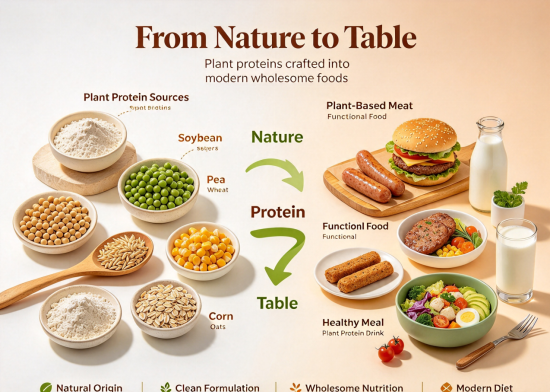
As the plant‑based food and clean‑label movements sweep the globe, a seemingly low‑key yet ubiquitous name is quietly transforming our dining tables – Hydrolyzed Vegetable Protein (HVP). It is the hidden force behind the "meaty umami" in soups, sauces, instant noodles, and plant‑based meats, and a key to upgrading plant protein nutrition.
What exactly makes it so valuable? Let's begin with its essence.
From Plant Protein to Umami Core: Decoding HVP
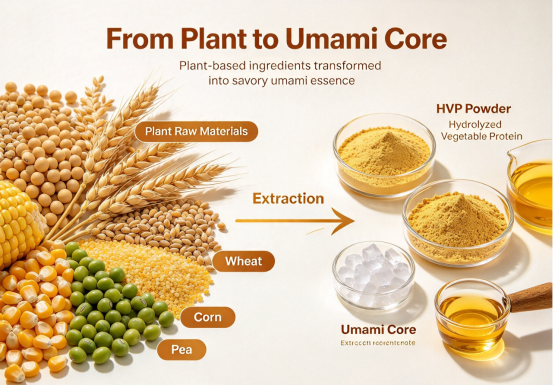
HVP is a flavour‑enhancing ingredient produced by hydrolysing plant proteins – such as soybean, wheat, corn, or pea – into small peptides and amino acids. Its core value lies in delivering rich umami, mimicking the flavour of natural meat, which is why it is widely used in processed foods, seasonings, snacks, and ready‑to‑eat meals.
Compared with natural meat extracts and yeast extracts, HVP is a more cost‑effective alternative. Its demand is closely tied to the growth of convenience foods, plant‑based diets, and the food processing industry.
Hydrolysis Process: The Scientific Choice Between Enzymatic and Acid Methods
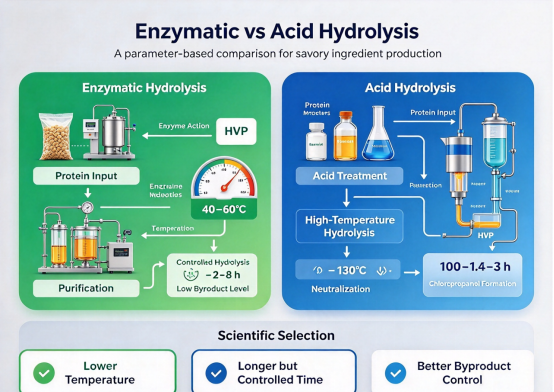
HVP production relies primarily on two hydrolysis methods: enzymatic hydrolysis and acid hydrolysis.
Acid hydrolysis is the traditional process – lower in cost, but potentially generating processing by‑products such as chloropropanols, which has become one of consumers' main concerns about HVP. Enzymatic hydrolysis, by contrast, uses proteases to break down proteins under mild conditions, avoiding amino acid degradation, better preserving bioactivity, and reducing the formation of harmful by‑products.
A 2025 study compared the hydrolysis effects of bromelain, ficin, papain, and pepsin on soy and mung bean proteins. Results showed that mung bean protein, due to its looser structure, achieved significantly higher degrees of hydrolysis – reaching 46.5% after 12 hours with 10% bromelain, compared with only 26.9% for soy protein. Mung bean protein hydrolysates also exhibited stronger antioxidant activity, with a DPPH scavenging rate of 78.4%, attributed to the 200–1000 Da small peptides generated.
This finding indicates that raw material selection and optimisation of enzymatic hydrolysis are driving HVP's upgrade from a "flavouring agent" to a "functional ingredient."
Beyond Umami: The Health Functional Potential of HVP
The value of HVP goes far beyond flavouring. Studies show that soy protein hydrolysates (SPHs) possess multiple bioactivities, including:
- Blood Sugar Regulation: Helps regulate blood glucose levels in diabetic states
- Weight Management: Reduces weight gain in obese states
- Blood Pressure Regulation: Exhibits antihypertensive activity
- Antioxidant & Anti‑inflammatory: Demonstrates antioxidant, antibacterial, and immunomodulatory potential
These findings have expanded HVP's application boundaries from food flavouring to nutraceuticals and functional foods.

Market Landscape: Asia‑Pacific Leads, Plant‑Based Drives Growth
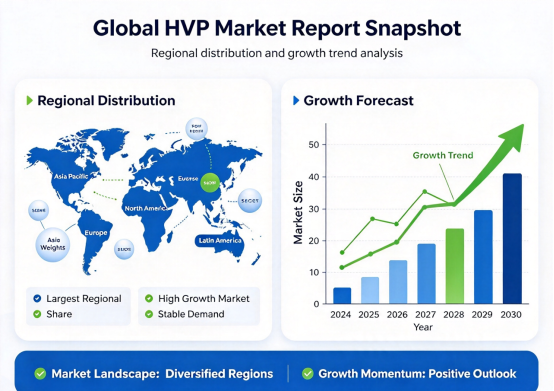
The global HVP market is on a steady growth trajectory. In 2025, the market size was approximately USD 2.37 billion, projected to reach USD 4.08 billion by 2034, with a CAGR of 6.23%.
Asia‑Pacific holds the dominant position, with a market share exceeding 35% in 2025, driven largely by China's massive instant noodle and seasoning industry, as well as demand in Japan and South Korea for high‑quality, low‑sodium HVP. North America is the fastest‑growing region, with a CAGR of 7.65%, driven by plant‑based dietary trends and clean‑label demand.
By source, soy‑based products hold the largest market share, exceeding 45%, due to their superior amino acid composition and outstanding umami performance. Pea‑based HVP is the fastest‑growing segment, with a CAGR of 6.87%, driven by allergen‑free and non‑GMO demand.
Challenges and Trends: Clean Label Reshaping the Industry
Despite its broad prospects, the HVP industry faces profound consumer perception challenges. Health‑conscious consumers often associate chemically hydrolysed protein with MSG and artificial additives, prompting manufacturers to seek more costly enzymatic hydrolysis alternatives to meet clean‑label standards.
Key trends include:
- Clean Label & Allergen‑Free Products: Manufacturers are reformulating HVP to reduce artificial additives and launch soy‑free, gluten‑free, and non‑GMO products
- Enzymatic Technology Upgrade: Enzymatic hydrolysis is replacing traditional acid hydrolysis to improve flavour, texture, and nutritional properties
- Low‑Sodium Formulations: With 50% of consumers stating they actively limit sodium intake, reducing sodium content has become a major driver of reformulation
- Plant‑Based Meat Application Expansion: HVP applications in plant‑based meat alternatives are growing at a CAGR of 7.53%, making it the fastest‑growing application segment
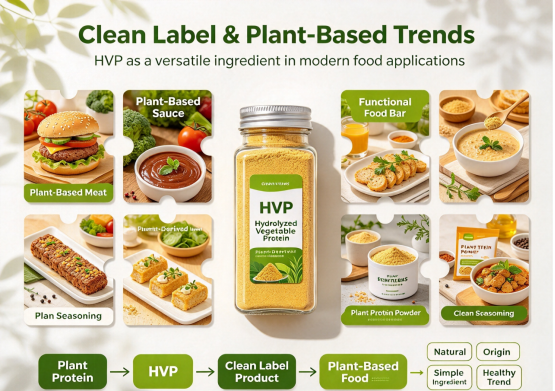
Embracing the Umami Future of Plant Protein
The story of Hydrolyzed Vegetable Protein is a fascinating convergence of modern food science and traditional fermentation wisdom. Starting from plant proteins and refined through precise hydrolysis control, it releases the dual value of umami and nutrition.
For raw material suppliers and food manufacturers, the ability to find balance between umami performance, clean label, and functional nutrition will be the key to winning the market. With continued advances in enzymatic technology and deepening consumer understanding of plant‑based products, HVP is moving from a "misunderstood additive" to a "recognised functional protein ingredient."