


Thymol The Natural Antimicrobial Compound That Outperforms Synthetic Preservatives
Thymol
A Versatile Natural Guardian from an Ancient Herb
In the long history of human use of herbs, thyme (Thymus vulgaris) has always held an important place. The core substance that gives this aromatic herb its distinctive pungent aroma and powerful effects is the main subject of this article: Thymol.
As a naturally occurring monoterpene phenol, thymol is not only a flavor highlight in cooking but also shows broad application prospects in modern medicine, agriculture, and daily life. It is hailed as a “natural antimicrobial agent” and an “ancient guardian.”
🌱 What Exactly is Thymol?
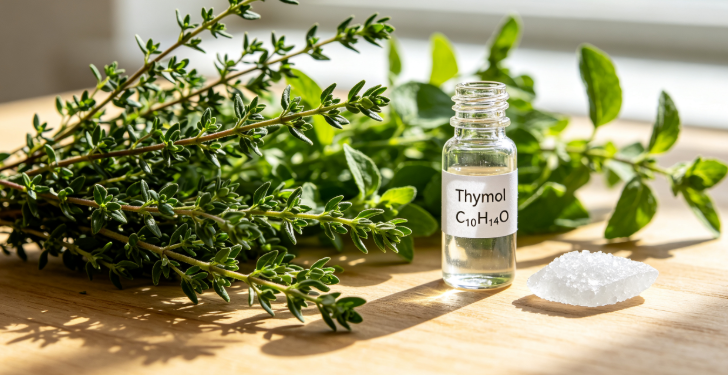
Thymol (chemical formula C₁₀H₁₄O) is the main active component of the essential oils of Lamiaceae plants (such as thyme and oregano), with content reaching as high as 20%–60%. At room temperature, it appears as colorless or white crystals with a strong, pleasant, spicy aroma.
It is worth noting that thymol and another common compound, carvacrol, are isomers. They often coexist in plant essential oils, but thymol’s antimicrobial activity is generally considered to be milder and more stable.
⚡ Core Benefits & Mechanisms
The powerful effects of thymol stem from its multi-target bioactivity:
1. Broad-Spectrum Antimicrobial Action
This is thymol’s most renowned benefit. It disrupts the cell membrane structure of bacteria, increasing membrane permeability and leading to the leakage of cellular contents. At the same time, it can inhibit bacterial DNA replication and protein synthesis.
- It is particularly effective against Gram-positive bacteria (e.g., Staphylococcus aureus, Streptococcus).
- It also shows significant inhibitory effects on some fungi (e.g., Candida albicans).
2. Antioxidant & Anti-inflammatory
Thymol effectively scavenges free radicals and inhibits lipid peroxidation. In inflammatory responses, it inhibits the activity of key pro-inflammatory enzymes like COX-2, thereby alleviating symptoms such as redness, swelling, and pain.
3. Digestive Health & Antispasmodic
It stimulates the secretion of gastric juice and bile, relieves gastrointestinal bloating, and has an antispasmodic effect on smooth muscle, helping to improve indigestion.
4. Local Anesthetic & Analgesic
At higher concentrations, thymol has mild local anesthetic properties and is often used in some dental preparations to relieve dentin hypersensitivity.

🧪 Diverse Applications
1. Pharmaceuticals & Oral Care
- Mouthwash & Toothpaste Additive: Effectively kills Streptococcus mutans in the oral cavity, preventing dental caries and gingivitis while providing fresh breath.
- Over-the-Counter (OTC) Medications: Often used as an active ingredient in cough syrups and expectorants to relieve bronchitis and upper respiratory tract infections.
- Topical Antiseptics: Acts as a natural preservative in some antibacterial ointments and skin cleansers.
2. Food Industry
- Natural Food Preservative: Inhibits foodborne pathogens like Listeria and Salmonella, and is often used in meat products, cheese, and fruit preservation.
- Flavoring Agent: Provides a unique pungent and spicy flavor in baked goods, sauces, and alcoholic beverages.
3. Agriculture & Animal Husbandry
- Botanical Insecticide: Has repellent and toxic effects against pests like mites and aphids.
- Feed Additive: Adding it to livestock and poultry feed can enhance animal disease resistance and reduce the use of antibiotics.
4. Daily Home Use
- Environmental Disinfectant: A key active ingredient in many “natural” household cleaning sprays and air fresheners.
- Laundry Care: Effective against dust mites, it can be added to laundry detergents to help combat allergies.
🎯 Target Users & Usage Scenarios
| Target Users / Scenarios | Recommended Rationale and Usage |
|---|---|
| 🦷 Oral Health gingivitis, bad breath |
Alcohol-free mouthwashes with thymol help reduce plaque and freshen breath. |
| 🌬️ Respiratory Sensitivity colds, coughs |
Steam inhalations or diluted massage oils can ease bronchial discomfort. |
| 🍯 Home Chefs natural preservation |
Use thyme essential oil (thymol-rich) in jams or meat marinades for extended shelf life. |
| 🏕️ Outdoor Enthusiasts insects, minor cuts |
Dilute as a repellent or apply to minor wounds for its astringent and antimicrobial action. |
| 🌾 Organic Farmers crop protection |
Effective biocontrol against downy mildew and certain pests. |
🛡️ Safety & Precautions
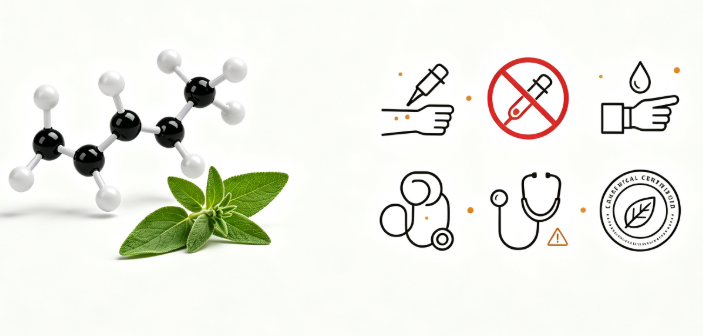
Although thymol is natural in origin, its concentrated extracts are potent active substances. Follow these principles:
- Do Not Ingest in High Concentrations: Pure thymol is a mucosal irritant. Ingesting high concentrations of essential oil can cause stomach burning, nausea, and even liver and kidney damage. Use only as a flavoring (trace amounts) or in regulated pharmaceuticals.
- Skin Sensitivity Test: Must be diluted for external use (recommended <1%). Pregnant women, infants, and epileptic individuals should avoid or use strictly under medical supervision.
- Drug Interactions: Patients on anticoagulants (e.g., warfarin) should use cautiously, as high doses may affect coagulation.
- Source Selection: Choose essential oils or extracts from reputable brands that specify thymol content and are verified by GC-MS.
🌿 Conclusion
Thymol is a precious gift from nature to humanity. In an era where antibiotic resistance is a growing concern, this compound from an ancient herb is regaining scientific interest due to its multi-target antimicrobial mechanisms and broad bioactivity.
It bridges traditional wisdom and modern technology, serving as a powerful ally for a healthy, green lifestyle. Rational use of thymol will allow it to better serve our daily lives.
🌿 About the Supplier
If you are interested in high-quality Thymol or other Active Pharmaceutical Ingredients, please feel free to contact us.
Company: Rui Zelin Bio
✦ 17+ years · production & sales integrated


