


The Application and Technological Innovation of Broad Bean Protein in the Food Industry
2025-11-06
1.Analysis of Protein Composition and Nutritional Value
The protein content in broad bean seeds is approximately 25% - 35%, significantly higher than that of grains such as wheat and corn, and similar to that of soybeans. Its amino acid composition has typical characteristics of legume proteins: it contains abundant essential amino acids, especially lysine (Lys), with a content of 6.5% - 7.2%, significantly superior to that of grain proteins, which can effectively make up for the deficiency of limiting amino acids in plant-based diets.
Compared with soy protein, the methionine (Met) content of broad bean protein is relatively low. However, through proper formulation design, amino acid complementation can be achieved. The content of bioactive peptide precursors in broad bean protein is relatively high, such as trypsin inhibitors and lectins, which are anti-nutritional factors. These need to be moderately controlled through processing techniques to improve the digestion utilization rate.
Proteomics studies have shown that broad bean protein is mainly composed of globulin (70%-80%) and albumin (15%-20%), with globulin mainly consisting of 11S globulin (bean globulin) and 7S globulin (associated bean globulin). The 11S globulin has a molecular weight of approximately 320 kDa and is formed by six acidic subunits (A) and six basic subunits (B) connected by disulfide bonds, forming a hexameric structure; the 7S globulin has a molecular weight of approximately 180 kDa and presents a trimeric configuration. This multi-level structure endows broad bean protein with unique colloidal properties and surface activity, laying the molecular foundation for its application in food systems.
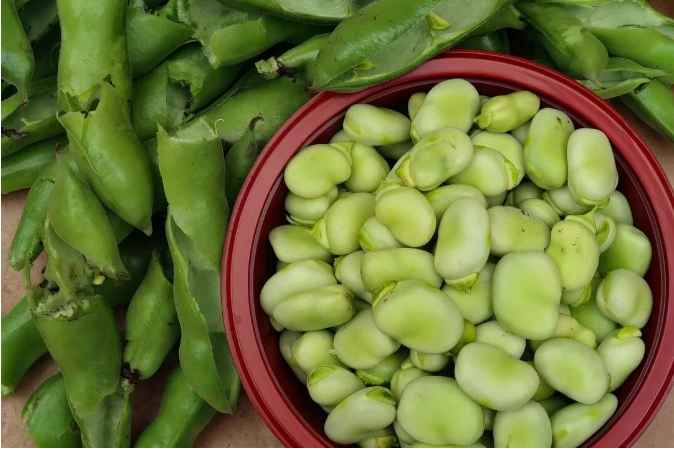
The functional properties of broad bean protein are significantly influenced by pH value, ionic strength, temperature and processing conditions. Near the isoelectric point (pH 4.5-5.0), the protein solubility drops to the lowest level (<10%), while it significantly increases when far from the isoelectric point. By regulating the pH value, the protein can be hierarchically precipitated. This property has been applied in the industrial extraction of broad bean protein. In terms of emulsifying performance, broad bean protein can form a stable emulsion with a particle size of approximately 200 nm at pH 7.0, and its emulsifying activity index (EAI) can reach 15-20 m²/g, which is superior to pea protein but lower than soy protein isolate.
Heat treatment significantly improves the functional properties of soybean protein. Studies have shown that after wet heat treatment (80-100°C, 15-30 min), the protein molecules partially unfold, and the exposed hydrophobic groups increase, resulting in a 30%-50% increase in surface hydrophobicity, thereby enhancing its emulsifying and foaming properties. Ultrasonic-assisted treatment (20 kHz, 400 W, 15 min) can effectively reduce the particle size of protein aggregates, improve the solubility to over 90%, while maintaining over 85% enzymatic resistance, providing a technical path for the development of highly stable food ingredients.
The gel properties are the key indicators for the development of meat product substitutes using soybean protein. Under the combined effect of NaCl (2.0%) and CaSO₄ (0.3%), soybean protein can form a dense gel network with an elastic modulus (G') ranging from 800 to 1200 Pa, and its texture characteristics are similar to those of animal-derived gel proteins. Through cross-linking catalyzed by transglutaminase (TGase), the gel strength can be further enhanced by 40% to 60%, providing a solution for the texture improvement of plant-based hams, meat-free patties, and other products.
3.Innovative Extraction and Purification Technology for Broad Bean Protein
Although the traditional alkaline dissolution and acid precipitation method is mature in technology, it has problems such as severe protein denaturation and wastewater pollution. In recent years, the application of membrane separation technology, enzyme-assisted extraction, and green solvent systems has significantly improved the extraction efficiency and quality of broad bean protein.
Using a pH 9.0 alkaline solution for extraction combined with ceramic membrane (0.2 μm) filtration, the protein recovery rate can reach over 85%. At the same time, it can effectively remove impurities such as polyphenols and oligosaccharides, and the product purity exceeds 90%. In enzymatic extraction, the synergistic treatment of cellulase and hemicellulase (at 50℃, pH 5.0, for 2 hours) can increase the protein extraction rate to 92%, and the molecular weight distribution of the protein is more concentrated in the 10-50 kDa range, significantly optimizing the functional characteristics.
The anti-solvent precipitation method, as an emerging separation technology, achieves selective protein precipitation through an ethanol/water system (volume ratio 1:4). The content of isoflavones in the obtained protein powder is reduced by 80%, and the bitterness is significantly alleviated. The supercritical CO₂ extraction technology can efficiently separate lipids and proteins under low temperature conditions (40℃), and is particularly suitable for the production of high-value protein products.
4.The expansion of the application fields of Broad Bean Protein in food industry
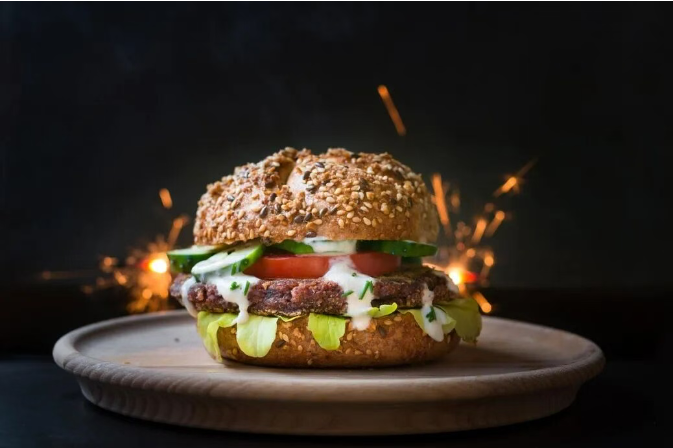
In the development of plant-based meat products, the combination of broad bean protein, pea protein and wheat protein (in a ratio of 5:3:2) can simulate the juiciness and fiber structure of animal meat. Through high-pressure homogenization (at 150 MPa) combined with 3D printing technology, a plant-based chicken breast product with a fiber orientation degree of 0.72 can be produced, and its shear force shows no significant difference from real chicken meat.
In the field of dairy product substitution, when broad bean protein is enzymatically hydrolyzed (with Alcalase at 2.0% for 60 minutes) and then combined with coconut oil microcapsules, a fermented plant-based beverage with a texture similar to full-fat yogurt can be developed. Its water retention capacity reaches 92%, and its sensory score is comparable to that of commercial products.
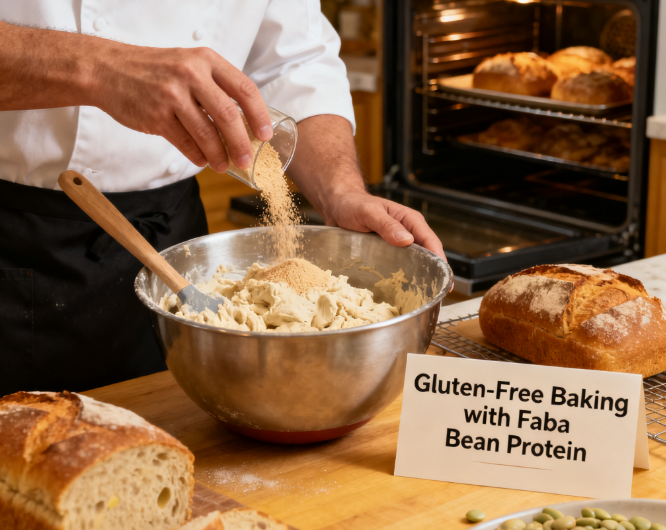
In the field of baked goods, replacing part of wheat flour with mung bean protein powder (with an addition rate of 5% - 10%) can significantly increase the volume of bread (by 15% - 20%), slow down the aging rate of starch, and extend the shelf life by 30% - 40%. In sports nutrition foods, the hydrolyzed mung bean protein (DH 15%) exhibits excellent characteristics in releasing branched-chain amino acids (BCAA), with an in vitro digestion rate of 95%, and can be an effective substitute for whey protein.
5.Sustainability advantages and industry outlook
From the perspective of Life Cycle Assessment (LCA), the water footprint of soybean cultivation (2.1 m³/kg protein) is significantly lower than that of soybeans (5.4 m³/kg) and whey protein (9.8 m³/kg), with a nitrogen fertilizer utilization rate of 65%, far exceeding that of traditional crops. With the development of vertical agriculture and precise irrigation technologies, the resource efficiency of soybean protein production is expected to further improve.
In the future, the application of gene editing technologies (such as CRISPR/Cas9) in the improvement of broad bean varieties is expected to be highly promising. By introducing targeted mutations to key genes involved in the synthesis of anti-nutritional factors (such as the TI gene family), specialized varieties with low sensitivity and high protein content can be cultivated. Additionally, research on the delivery of lipid-soluble nutrients (such as vitamin D₃) using broad bean protein nanoparticles has shown initial success, with a encapsulation rate of up to 85%, providing an innovative carrier for the development of functional foods.
If you need to purchase Broad Bean Protein,visit //www.ruizelinbio.com/ or email address:info@ruizelinherb.com. We will reply to you as soon as possible,Thanks very much.
Previous News: 95% of Cosmetics Contain These 10 Natural Antioxidant Plants!
Next News: NAC, Sulforaphane, Alliin, Ergothioneine - Who is the Sulfur Superstar in Antioxidants?


