


Adequate intake of B vitamins can improve many chronic diseases.
2026-03-06
In recent years, research on the B vitamins' roles in promoting growth and development, immune regulation, antioxidation, and reducing the risk of diet-related non-communicable diseases has received increasing attention, yielding numerous research results.

This article summarizes relevant information on B vitamins, providing a scientific basis for guiding the population to consume B vitamins appropriately to promote health.
Table of Contents:
Vitamin B1 (Thiamine)
Vitamin B2 (Riboflavin)
Vitamin B3 (Niacin)
Vitamin B5 (Pantothenic Acid)
Vitamin B1 (Thiamine)
Vitamin B2 (Riboflavin)
Vitamin B3 (Niacin)
Vitamin B5 (Pantothenic Acid)
1. Vitamin B1 (Thiamine)
Vitamin B1, also known as thiamine, is a major component of decarboxylase coenzymes.
It participates in the oxidative decarboxylation of pyruvate, a fundamental substance essential for carbohydrate metabolism.
It maintains normal nerve function.
It inhibits cholinesterase activity, maintaining normal intestinal peristalsis.
Vitamin B1, also known as thiamine, is a major component of decarboxylase coenzymes.
It participates in the oxidative decarboxylation of pyruvate, a fundamental substance essential for carbohydrate metabolism.
It maintains normal nerve function.
It inhibits cholinesterase activity, maintaining normal intestinal peristalsis.
When vitamin B1 is deficient:
1. Impaired glucose metabolism leads to pyruvate accumulation, increasing pyruvate levels in the blood, urine, and brain tissue. This results in symptoms such as polyneuritis, skin numbness, heart failure, muscle atrophy, and lower limb edema, clinically known as beriberi.
2. Increased cholinesterase activity accelerates acetylcholine hydrolysis, affecting nerve conduction and causing slow gastrointestinal motility, reduced digestive fluid secretion, loss of appetite, and indigestion.
Because vitamin B1 is closely related to glucose metabolism, a higher intake of carbohydrates increases the need for vitamin B1.
1. Impaired glucose metabolism leads to pyruvate accumulation, increasing pyruvate levels in the blood, urine, and brain tissue. This results in symptoms such as polyneuritis, skin numbness, heart failure, muscle atrophy, and lower limb edema, clinically known as beriberi.
2. Increased cholinesterase activity accelerates acetylcholine hydrolysis, affecting nerve conduction and causing slow gastrointestinal motility, reduced digestive fluid secretion, loss of appetite, and indigestion.
Because vitamin B1 is closely related to glucose metabolism, a higher intake of carbohydrates increases the need for vitamin B1.
2. Vitamin B2 (riboflavin)

Vitamin B2, also known as riboflavin, exists in the body in the forms of flavin mononucleotide (FMN) and flavin adenine dinucleotide (FAD).
It maintains the normal metabolism of proteins, fats, and carbohydrates.
It promotes normal growth and development.
It maintains the integrity of the skin and mucous membranes, etc.
When vitamin B2 is deficient: It first manifests on the skin, causing chapped lips, angular cheilitis, seborrheic dermatitis, glossitis, keratitis, conjunctivitis, and leukopenia.
Factors affecting vitamin B2:
Medications: Aluminum hydroxide or magnesium hydroxide can reduce intestinal absorption of vitamin B2; boric acid can bind with vitamin B2 in the body to form a complex, thereby accelerating the excretion of vitamin B₂ in urine; chlorpromazine can also significantly increase urinary vitamin B2 excretion.
Medications: Aluminum hydroxide or magnesium hydroxide can reduce intestinal absorption of vitamin B2; boric acid can bind with vitamin B2 in the body to form a complex, thereby accelerating the excretion of vitamin B₂ in urine; chlorpromazine can also significantly increase urinary vitamin B2 excretion.
Alcohol: Interferes with the digestion and absorption of bound form vitamin B2.
Others: Caffeine, saccharin, copper, zinc, iron, etc., can also affect vitamin B₂ absorption.
3. Vitamin B3 (niacin)

Vitamin B3, also known as niacin, exists in the body as nicotinamide and is a component of coenzyme I (NAD) and coenzyme II (NADP).
Niacin participates in the body's energy metabolism, regulates blood glucose and lipid levels, and maintains the normal function of the nervous system.
NAD is also essential for several important physiological activities, including genome stability, neuroprotection, and metabolism.
During aging, NAD levels typically decline, leading to DNA damage, oxidative stress, and mitochondrial dysfunction.
Niacin participates in the body's energy metabolism, regulates blood glucose and lipid levels, and maintains the normal function of the nervous system.
NAD is also essential for several important physiological activities, including genome stability, neuroprotection, and metabolism.
During aging, NAD levels typically decline, leading to DNA damage, oxidative stress, and mitochondrial dysfunction.
Vitamin B3 deficiency: Insufficient niacin intake can lead to systemic diseases known as pellagra.
Severe niacin deficiency can present with the typical "3D" symptoms: dermatitis, diarrhea, and dementia.
Because vitamins B1 and B2 act as coenzymes in the intracellular conversion of tryptophan to niacin, affecting niacin metabolism, niacin deficiency often coexists with deficiencies in vitamins B1 and B2.
Severe niacin deficiency can present with the typical "3D" symptoms: dermatitis, diarrhea, and dementia.
Because vitamins B1 and B2 act as coenzymes in the intracellular conversion of tryptophan to niacin, affecting niacin metabolism, niacin deficiency often coexists with deficiencies in vitamins B1 and B2.
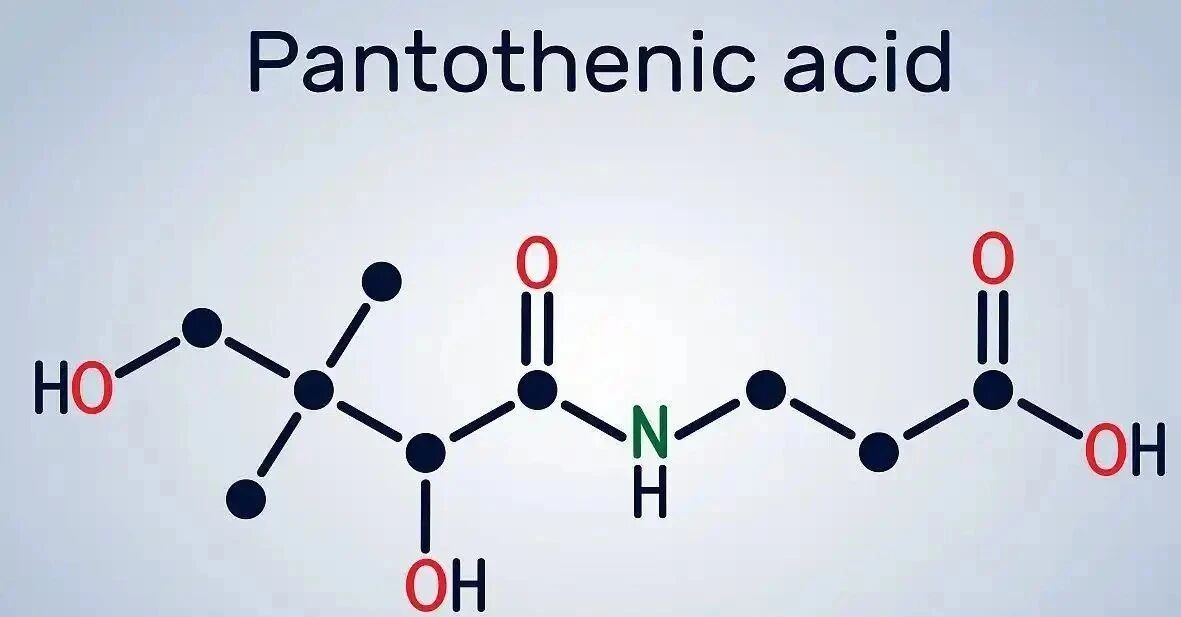
4. Vitamin B5 (pantothenic acid)
Vitamin B5, also known as pantothenic acid, is a component of coenzyme A (CoA) and phosphopontoylthioethylamine.
It participates in fatty acid synthesis.
The oxidative decomposition of fatty acids and amino acids.
The heme synthesis process.
The synthesis of steroid hormones and vitamin D.
The formation of porphyrins and porphyrin rings, etc.
It participates in fatty acid synthesis.
The oxidative decomposition of fatty acids and amino acids.
The heme synthesis process.
The synthesis of steroid hormones and vitamin D.
The formation of porphyrins and porphyrin rings, etc.
Vitamin B5 Deficiency:
Pantothenic acid deficiency affects the physiological functions of many systems, commonly resulting in reduced fat synthesis and insufficient energy production.
Symptoms include: irritability, loss of appetite, indigestion, abdominal pain, nausea;
headache, depression, low mood, fatigue;
numbness and tingling in the hands and feet, cramps in the arms and legs, burning sensation in the feet, etc.
It also increases stress response, reduces antibody production, and increases insulin sensitivity, leading to hypoglycemia.
Because pantothenic acid is widely present in animal and plant foods, deficiency diseases are rare.
Factors contributing to Vitamin B5 deficiency:
Long-term consumption of semi-synthetic diets lacking pantothenic acid
Use of pantothenic acid antagonists
Improper dietary planning and improper cooking methods
Insufficient food supply
Long-term consumption of semi-synthetic diets lacking pantothenic acid
Use of pantothenic acid antagonists
Improper dietary planning and improper cooking methods
Insufficient food supply
B vitamins offer numerous benefits for maintaining human health, serving as essential nutrients for everything from energy metabolism and nervous system function to skin health and immune system support.
B vitamins work synergistically; taking multiple B vitamins at once is more effective than taking them separately. Adequate supplementation with B vitamins can significantly improve overall health and prevent many chronic diseases.
B vitamins work synergistically; taking multiple B vitamins at once is more effective than taking them separately. Adequate supplementation with B vitamins can significantly improve overall health and prevent many chronic diseases.
Previous News: p-Coumaric Acid: Nature's Versatile Assistant Hidden in Plants
Next News: Potassium Sorbate: The Safe, Effective Preservative Powering Modern Quality


