

Why Your Home-Cooked Dishes Are Always Missing That “Soul of Umami”?
Why Your Home-Cooked Dishes Are Always Missing That “Soul of Umami”?
01. The Secret of Umami: More Than Just MSG
The flavor we call “umami” is the fifth basic taste, following sweet, sour, bitter, and salty. In the past, people thought umami came solely from MSG (monosodium glutamate). But scientists later discovered that the true “master of umami” is actually a team that works in synergy.
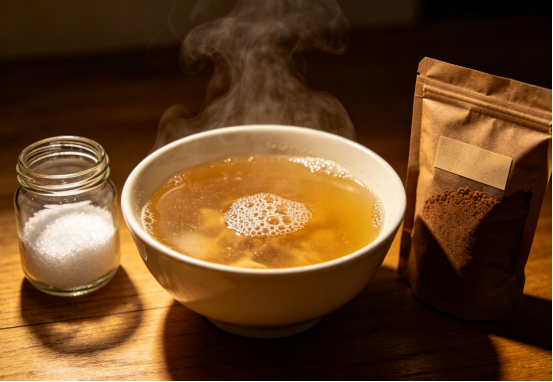
And Disodium Inosinate is the most indispensable “super synergist” in this team.
02. What Exactly Is Disodium Inosinate?
Don’t let the complicated chemical name scare you. Simply put, it is widely present in the meat, fish (especially dried fish), and mushrooms we eat every day. That rich, lingering savoriness you feel at the back of your throat after a sip of good broth — that’s largely the work of Disodium Inosinate.
As a food ingredient, it belongs to the nucleotide flavor enhancer family. It’s not meant to replace MSG, but rather to unlock MSG’s full potential.
03. The “Umami Explosion” Effect: 1+1 > 2
This is arguably the most magical property of Disodium Inosinate.
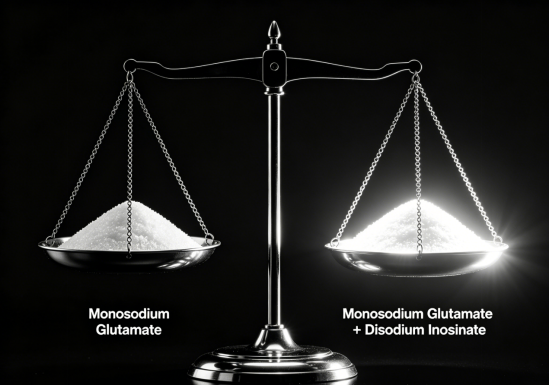
Studies show that when Disodium Inosinate meets glutamate (the main component of MSG), their umami intensity is not additive — it’s multiplicative, boosting the savoriness by several times, even dozens of times!
🔹 MSG alone: direct, straightforward umami — comes quickly, fades fast.
🔹 Disodium Inosinate + MSG: round, full-bodied, layered umami with a long, pleasant aftertaste.
That’s why you’ll find Disodium Inosinate in many soy sauces, bouillon powders, instant noodle seasoning packets, and snacks. It delivers a quantum leap in flavor quality at a minimal cost.
04. The Hidden Hero in the Kitchen
For modern food industry, Disodium Inosinate is nothing short of a game-changer:
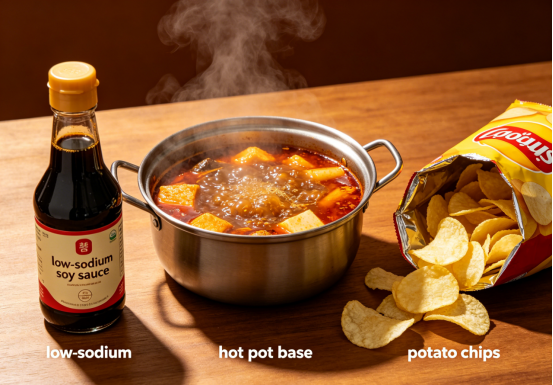
- Making low-sodium foods delicious: In reduced-salt, low-fat healthy products, flavor often becomes bland without salt and oil. Adding Disodium Inosinate compensates for the flavor gap, making healthy meals tasty.
- Enhancing frozen foods’ flavor: Freezing can damage the cellular structure of food, causing umami loss. Adding Disodium Inosinate effectively “restores” lost savoriness, so frozen dumplings and fish balls remain delicious.
- More stable, longer-lasting flavor: It is heat-stable and reliable, ensuring consistent umami throughout the product’s shelf life.
05. Is It Safe? Can I Eat It Without Worry?
This is the most common question. Rest assured: Disodium Inosinate is globally recognized as a safe food additive. It is permitted for use in most countries and regions, including China, the United States, the European Union, Japan, and many others.
Just like eating shiitake mushrooms or drinking fish soup, it is naturally metabolized by the human body and does not accumulate. As long as it’s used in compliance with national standards, it is perfectly safe.
Rather than worrying about compliant food additives, we should pay more attention to the health risks of excessive sugar, salt, and oil.
Afterword: A Little Ingredient, A World of Umami
Next time you pick up a bag of snacks, cook instant noodles, or sprinkle some bouillon powder, take a glance at the ingredients list. If you see the name “Disodium Inosinate”, you can smile knowingly —
Because now you know: it’s this little “umami booster” that works quietly behind the scenes, delivering that rich, layered, and lingering “soul of umami” into every bite.