


What is the difference between Coenzyme Q10, NMN, PQQ and NAD+?

PQQ, which stands for pyrroloquinoline quinone, is a vitamin-like bioactive substance that is popular for its many beneficial effects on the body. PQQ is widely found in nature, including many animals, plants and microorganisms, such as fermented soy or natto, green pepper, kiwi, parsley, tea, papaya, spinach, celery, breast milk and so on.
The biological functions of PQQ mainly focus on two aspects: first, it can support the growth and development of mitochondria and stimulate the rapid growth of human cells; Secondly, it has good antioxidant properties, which can help remove free radicals and reduce cell damage. These two functions make it have a powerful role in brain health, cardiovascular health, metabolic health and other aspects. Because the body cannot synthesize PQQ on its own, it can be supplemented by dietary supplements, which are usually in powder form and prepared by microbial fermentation.
PQQ can enhance the body's immune system and nervous system function. It is widely involved in the intracellular REDOX process, promoting energy metabolism and reducing oxidative damage in cells, while promoting the proliferation and connectivity of neurons, helping to improve learning and memory ability and promoting the recovery of nerve function. It can reduce stress, shorten recovery time and promote the release of growth factors. In addition, PQQ can also promote angiogenesis, anti-aging and other biological effects. According to research, PQQ can also promote mitochondrial health, thereby delaying the aging process.
Since its discovery in 1979, PQQ has received considerable attention in nutrition and pharmacology. Since 2012, it has successively obtained the Health Canada (HC), the United States Food and Drug Administration (FDA) GRAS certification, the Japanese Ministry of Health, Labor and Welfare (MHLW) and the European Commission (ESFA) certification.
From the point of view of functional characteristics, the advantages of PQQ are very prominent, and there is a greater application potential in the market. PQQ can support the growth and development of mitochondria, stimulate the rapid growth of human cells, and has strong antioxidant properties, which can help remove free radicals and reduce cell damage. It has a powerful role in cardiovascular health, brain health, metabolic health and other aspects, mainly to help physical recovery, anti-fatigue.
NMN, which stands for nucleotide diphosphate, is a precursor of vitamin B3 and can be converted into NAD+ in cells. NAD+ is an intracellular energy molecule that can affect many essential functions of the body, including mitochondrial function, DNA repair, and cell regeneration. As we age, the amount of NAD+ in the body gradually decreases, which leads to decreased energy metabolism and various physiological characteristics associated with aging.
Many studies have shown that NMN can reverse this, resulting in many health benefits. It can promote NAD+ levels in the body, which can enhance mitochondrial function, improve metabolic capacity, improve blood sugar levels and regulate blood pressure, and reduce the physiological characteristics of aging, thus making people feel younger, healthy and energetic.
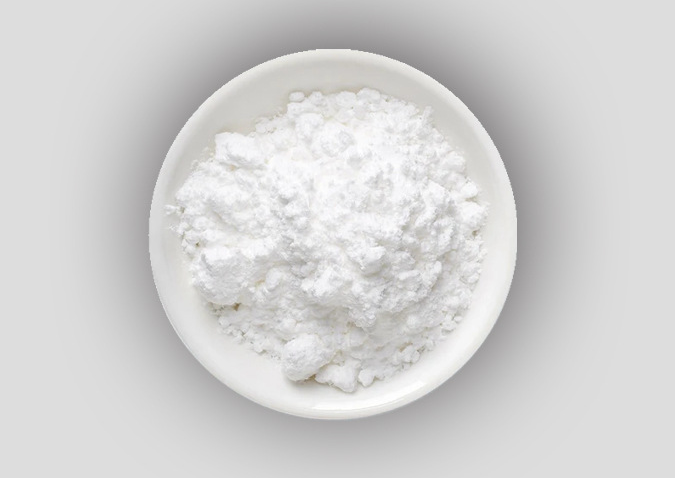
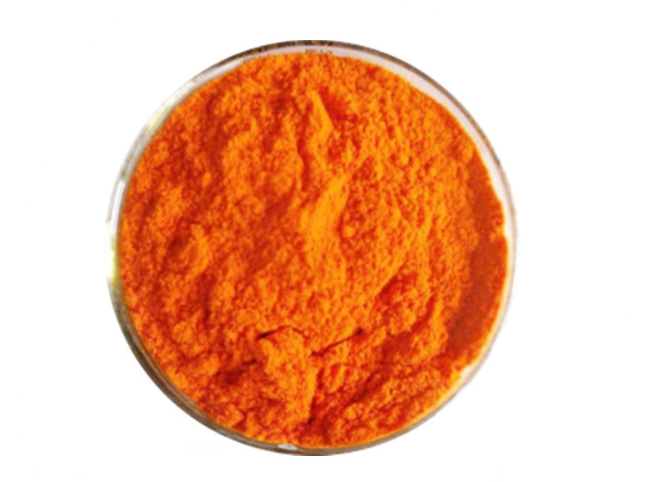
Coenzyme Q10 is a widely existed fat-soluble quinone compound in the body, which is a kind of drug for nourishing myocardium and improving myocardial metabolism. This product has the function of promoting oxidative phosphorylation and protecting the structural integrity of biofilm. It is used for the treatment of cardiovascular diseases, such as viral myocarditis, chronic cardiac insufficiency, hepatitis, such as viral hepatitis, subacute liver necrosis, chronic active hepatitis, cancer, and can alleviate some adverse reactions caused by radiotherapy and chemotherapy.
The elimination half-life of this product is about 34 hours, that is, the time taken to reduce the concentration of drugs in the blood or the amount of drugs in the body to half is about 34 hours.
Coenzyme Q10 is one of the commonly used therapeutic drugs in clinical cardiovascular department, and it is also one of the most widely used health products.
AD is a biological noun, Chinese name: nicotinamide adenine dinucleotide, referred to as coenzyme I. It is a transmitter electron, a coenzyme of many dehydrogenases in the body, connecting the tricarboxylic acid cycle and respiratory chain, and its function is to transfer the hydrogen removed during metabolism to flavin protein. NADH or more precisely NADH with H+ is its reduced form.
NAD + was initially found to be an important part of the process that transports chemical energy from food to the ATP fuel needed by cells. Recent research has shown that NAD + is itself an "energy currency" similar to ATP, a complex organic chemical that provides energy to drive many processes in living cells.
NAD + is also a functional signaling molecule in processes related to energy production, including PARP-1 and Sertuin. When DNA damage occurs, PARP-1 consumes a large amount of NAD+, resulting in reduced energy production. In addition, high levels of NAD + activate silencing regulatory proteins, enabling them to carry out metabolic and stress-protective responses and contribute to longevity.
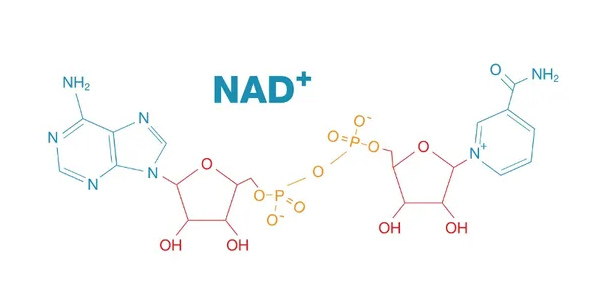
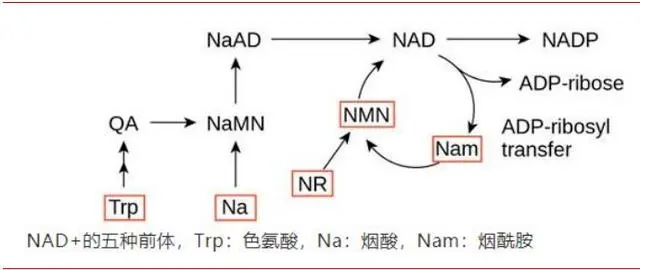
There are several ways that people can increase their levels of NAD+ by supplementing their precursors. Existing research data show that NAD+ has a total of NMN (nicotinamide mononucleotide), NA (niacin), NAM (nicotinamide), NR (nicotinamide ribose), Trp (tryptophan), these five precursor substances, which can be converted into NAD+.
By supplementing NAD+ precursors, the biosynthesis of NAD+ can be increased, thereby increasing the level of NAD+ in the body. Therefore, NAD+ precursor supplements also represent a potential therapeutic strategy for slowing aging and improving age-related diseases
5.Difference between PQQ and coenzyme Q10
PQQ, as a cell vitality muscle age black technology, can help cells generate new mitochondria and improve the efficiency of mitochondrial energy production, thereby helping to improve skin quality and slow down skin aging. At the same time, PQQ also has antioxidant and anti-inflammatory effects, which can reduce the damage of free radicals and maintain the health of the skin. Coenzyme Q10 is widely used in the treatment and prevention of cardiovascular and cerebrovascular diseases. Coenzyme Q10 can promote heart health and improve the efficiency of energy production, thus effectively alleviating various myocardial problems and preventing cardiovascular disease. Coq10 also has antioxidant and anti-inflammatory effects, which can protect blood vessel endothelial cells and prevent arteriosclerosis and thrombosis.
PQQ disodium salt is an aromatic hetero-o-quinone, which is defined as a new B vitamin after vitamin B12. Around 2012, it has been used as a new functional food raw material in the United States FDA, the Canadian Ministry of Health, Japan, the European Union and China, with anti-oxidation, anti-aging, improve human immunity and other functions, and is a safe food raw material. At present, the common PQQ supplement products on the market are mainly for brain health, sleep aid, oral beauty and other aspects, often used with MNM, coenzyme Q10 and other raw materials.
The antioxidant capacity of PQQ is 7.4 times that of vitamin C, and the amount of PQQ disodium salt required for the same effect may only be 1/10 to 1/100 of vitamin C. Because PQQ has greater thermal stability.
When these three nutrients are used in combination, they can work together to further enhance the body's immunity, promote cell regeneration and repair, and delay the aging process. For example, PQQ and NMN can promote each other, improve the level of intracellular NAD+, thereby enhancing the metabolic capacity of cells, and have a significant role in preventing aging, liver health care and so on. Coenzyme Q10 and PQQ can also complement each other to further enhance cardiovascular function, improve REDOX enzyme activity, prevent lipid peroxidation and so on.
It is worth mentioning that the relationship between PQQ and NMN goes beyond their features and functions. Studies have shown that PQQ can enhance the effect of NMN, make it more easily absorbed by cells, and improve its bioavailability. Therefore, many people use these two substances in combination to get the best health results.
In short, the combined use of PQQ, NMN and coenzyme Q10 can achieve a balance of nutrition supplements, help the body maintain normal physiological functions, and achieve better health care effects.