

S-Equol’s New Frontier: A “Maintenance System” for Muscle Cells
🧬 S-Equol’s New Frontier: A “Maintenance System” for Muscle Cells
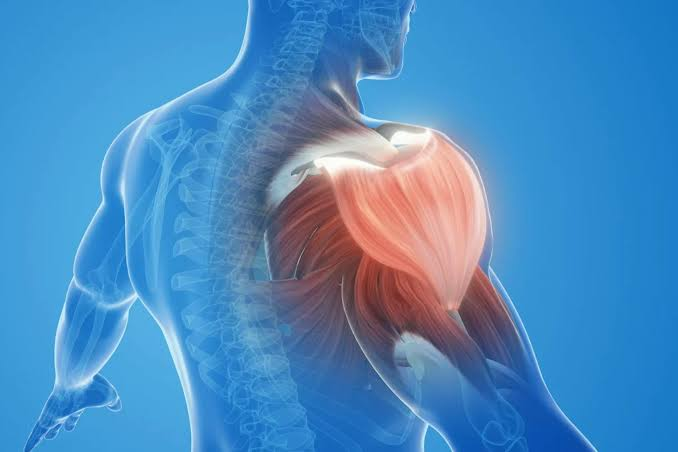
But for muscle to keep working over time, it also depends on daily maintenance inside the cell: how damaged proteins are handled, how abnormal organelles are renewed, and how cells keep themselves running under metabolic stress.
Muscle health is not only about “building.” It is also about “maintaining.”
A study published on September 23, 2026, in Journal of Nutrition and Metabolism placed S-equol into this conversation. Using a myotube cell model, the researchers examined its effects on autophagy, oxidative stress, mitochondrial status, and myotube atrophy
This adds a new research angle for S-equol: from the familiar territory of women’s nutrition toward the quality maintenance of muscle cells.
“Autophagy” may sound like a cell consuming itself. In reality, it is also a cellular mechanism for handling internal material: through lysosomes and related processes, cells degrade and recycle certain components, supporting renewal and quality control.
Muscle cells must endure long-term contraction and metabolic activity. If damaged components inside the cell are not handled in time, normal cellular function may be affected.
There is already foundational research in this area. A 2009 mouse study published in Cell Metabolism found that specific deletion of the autophagy-related gene Atg7 in skeletal muscle led to muscle atrophy, reduced strength, and accumulation of abnormal mitochondria.
This gives muscle nutrition research another lens. Beyond observing muscle synthesis, scientists can also examine whether cells can better cope with damage and metabolic stress. The new S-equol study enters from this point.
The experiment used rat-derived L6 myotubes. The researchers used palmitic acid to induce metabolic stress, establishing an in vitro model relevant to research on diabetes-associated muscle atrophy, and then added S-equol to observe changes.
The results showed that after S-equol intervention, structural indicators such as myotube diameter improved, and indicators related to reactive oxygen species (ROS) and lipid peroxidation decreased. Autophagy-related indicators also showed corresponding changes .
These results connect cell morphology with internal cellular status: the researchers observed changes in myotubes and further traced the processes potentially involved.
Observing changes in indicators alone is not enough to explain the underlying pathway. The researchers further added the autophagy inhibitor 3-MA and found that several improvements brought by S-equol were weakened or disappeared .
The experiment also used gene knockdown to examine the involvement of ERβ and AMPK. After reducing the effects of these two links, the influence of S-equol on autophagy-related indicators was hindered [1].
These intervention results support the mechanism proposed in the paper: ERβ–AMPK-related signaling may be involved in S-equol’s regulation of autophagy in myotubes.
This pathway can be understood in several steps: ERβ is a receptor-related starting point, AMPK participates in the regulation of cellular energy and metabolic status, and downstream ULK1 is associated with autophagy initiation. Receptor signaling, cellular renewal, and myotube status are thus connected within the same set of experiments.
This new clue—or new thread—for S-equol points to how muscle cells handle internal damage and maintain their own status.

The external morphology of myotubes corresponds to the operating state inside the cell. The study also combined microscopic imaging, electron microscopy, and membrane potential measurements to observe mitochondrial changes. Related indicators in the S-equol intervention group improved, and after autophagy inhibition, some of these improvements were likewise affected [1].
For muscle nutrition research, this perspective is compelling: cellular structure, metabolism, and renewal need to be understood together.
When discussing “mitochondrial nutrition,” one can further ask what it means in a specific tissue. In muscle cells, it involves maintaining status under metabolic stress, rather than simply attaching a broad “energy” label.
Myotube diameter, oxidative stress, and mitochondrial status were observed together, giving “muscle maintenance” content that can be examined item by item. The autophagy-related mechanism proposed in the paper therefore has a more complete experimental context.
Protein supply and exercise training are important topics in muscle health. Research on cellular quality control directs attention to another link: how does muscle maintain normal status under long-term use and metabolic stress?
S-equol’s entry into this research direction gives its ingredient story a new dimension. Around muscle maintenance, autophagy regulation, and mitochondrial status, more specific questions can be raised, and observational endpoints can be identified for future animal and human studies.
Muscle nutrition research is accommodating more questions about “how to maintain.” This creates a worthwhile position for specialty active ingredients to explore.
06 | RuiZelin S-Equol: Connecting Ingredient Research With Product Development
RuiZelin provides S-equol raw material, with purity and dry-basis content specifications both at ≥98%; both test results are 99.9%, and the appearance is a white crystalline powder [3].
Around S-equol, research beyond women’s nutrition is increasing. From blood vessels and the brain to this latest work on muscle cell maintenance, different studies are painting a more detailed picture of this molecule’s potential.
As S-equol research expands from familiar nutrition categories into cellular quality maintenance, RuiZelin S-Equol offers a high-purity ingredient option for brands and product developers exploring this emerging space.