


Light vs. Heavy Lycopodium Spore Powder: Full-Dimensional Differences & Application Guide
Light vs. Heavy Lycopodium Spore Powder: Full-Dimensional Differences & Application Guide
As a natural, versatile raw material derived from lycopodiaceae plants, lycopodium spore powder is widely used in pharmaceuticals, fireworks, precision casting, and agricultural pollination. However, its quality and value vary drastically between two categories—Light Lycopodium Spore Powder and Heavy Lycopodium Spore Powder. Rooted in different botanical sources, harvesting standards, and purification processes, these two types exhibit distinct physical properties, chemical compositions, and application scenarios. This guide deciphers their core differences to help you select the optimal type for your business needs.
I. Botanical Origin & Harvesting Standards
The fundamental distinction lies in their botanical sources, which directly determine the initial quality of the spores.
Light Type Light Lycopodium Spore Powder
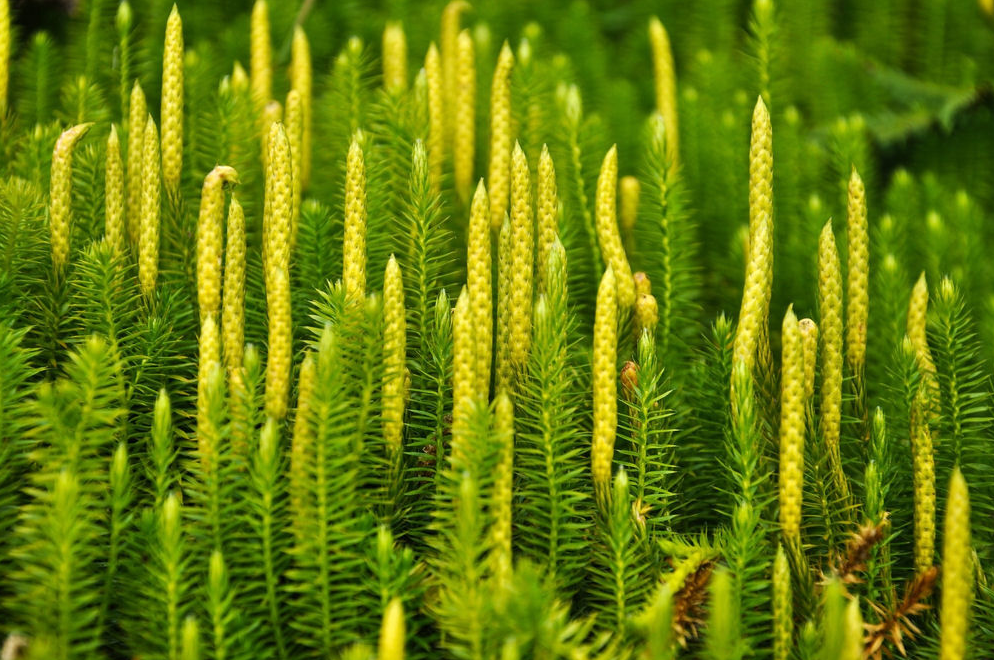
Sourced exclusively from the mature spores of Lycopodium clavatum (common name: Club Moss), a certified species of Lycopodiaceae. It is harvested strictly during the peak maturity period, ensuring only plump, intact spores are collected—free from sporangia, stem debris, or immature spores. These plants thrive in high-altitude, cool mountain forests with a long growth cycle of 2-3 years to produce spores, resulting in limited supply and premium quality.
Heavy Type Heavy Lycopodium Spore Powder
Mainly obtained from Palhinhaea cernua (common name: Staghorn Clubmoss) or a mixture of spores from other Lycopodiaceae species. Harvesting is less rigorous, often incorporating immature spores, sporangium shells, plant residues, and even fallen inferior spores. The host plants grow in low-altitude plains or hills with a short growth cycle of 1 year, leading to abundant supply but inferior raw material quality.
II. Core Physical & Technical Indicators (Dry Basis, 105℃ Constant Weight)
These indicators are critical for technical docking and quotation in international trade, reflecting the powder's performance in practical applications.
| Technical Indicators | Light Lycopodium Spore Powder | Heavy Lycopodium Spore Powder |
|---|---|---|
| True Specific Gravity (Pycnometer Method) | 1.060-1.065 | 2.05-2.15 |
| Bulk Density | 0.08-0.12g/cm³ | 0.35-0.50g/cm³ |
| Particle Size Distribution | 30-40μm, uniform particles (≥95% single size), sphericity ≥98% | 25-35μm, uneven particles, sphericity 80-85%, partial irregular shapes |
| Moisture Content | ≤5% (industry premium grade standard) | ≤8% (general grade, no strict control) |
| Ash Content | ≤1.0% (no inorganic impurities) | ≤5.0% (contains soil and plant ash impurities) |
III. Key Physical Properties (Practical Performance)
1. Hydrophobicity (Determined by Surface Wax Layer)
Light Type Features a thick, intact surface wax layer, achieving complete hydrophobicity. Water droplets form beads on the powder surface, remaining unsoaked and undiffused for 24 hours. No particles absorb water or sink when immersed in water.
Heavy Type Has a thin, partially damaged wax layer, with partial hydrophobicity. Water droplets soak and diffuse within 1-2 minutes of contact. When immersed in water, some particles absorb water and settle quickly.
2. Suspensibility (Suitable for Liquid Applications)
Light Type Maintains complete suspension in water, ethanol, petroleum ether, and other organic solvents for 24 hours without any sediment. It disperses evenly (100% dispersibility) without caking after shaking.
Heavy Type Stratifies within 1-2 hours in water, with 50-60% of particles settling and only a small amount suspending in the upper layer. It tends to cake after shaking, with poor dispersibility.
3. Combustibility (For Fireworks & Special Effects)
Light Type Low ignition point (around 220℃), burns with bright flames and blue cores, producing minimal smoke, fast burning speed, strong explosive force, and no residual hard lumps.
Heavy Type Higher ignition point (around 260℃), burns with dim flames (no blue cores), generates excessive smoke, slow burning speed, weak explosive force, and leaves a small amount of carbonized hard lumps.
4. Flowability & Stackability (For Industrial Feeding & Packaging)
Light Type Free-flowing powder that slides quickly when the glass container is tilted, with no wall adhesion or caking. It stacks loosely, is slightly dusty, and has a stack volume shrinkage rate of ≥30% after shaking.
Heavy Type Moderate flowability, prone to wall adhesion and caking—requiring shaking to slide slowly. It stacks tightly, rarely produces dust, and has a stack volume shrinkage rate of ≤10% after shaking.
IV. Chemical Composition & Purity
The core value components of lycopodium spore powder include fatty oils, phytosterols, and triterpenoids, with significant differences between the two types:
Light Type High purity (≥98% pure spores) with no sporangia, mycelium, or plant residues. Fatty oil content reaches 40-50%, phytosterols ≥1.5%, and triterpenoids ≥0.8%. It also contains small amounts of flavonoids and amino acids, with no harmful heavy metals (Pb/Cd/As ≤0.1mg/kg).
Heavy Type Low purity (80-90% pure spores) with impurities like sporangium shells, mycelium, and stem debris. Fatty oil content is only 25-35%, phytosterols ≤0.5%, and triterpenoids ≤0.2%. Flavonoid and amino acid contents are extremely low, and harmful heavy metals are prone to exceeding standards (Pb ≥0.5mg/kg in some batches).
V. Processing & Purification Technology
Both types undergo physical purification without chemical treatment, but the precision and process complexity directly affect the final quality.
Light Type Adopts a 6-step refined process: natural harvesting → manual screening (removing plant residues) → air classification (core process for separating inferior spores) → 800-mesh fine sieving → low-temperature drying (≤40℃, preserving the wax layer) → vacuum packaging. No impurity residues remain.
Heavy Type Only 2 basic steps: natural harvesting → rough sieving (200-mesh, removing only large particles) → room-temperature drying (60-80℃, easily damaging the wax layer) → general packaging. No classification or fine screening is performed, leaving impurities unremoved.
VI. Application Scenarios (Industry-Specific Matching)
The two types serve completely different markets, with the light type as a high-value premium raw material and the heavy type as a low-cost industrial material.
Light Type Light Lycopodium Spore Powder (High-Value Scenarios)
- Pharmaceutical & Health Product Raw Material: Certified medicinal spores for traditional Chinese medicine formulations (treating rheumatic arthralgia and muscle spasms). Used as an excipient in health product capsules (anti-adhesion, improving disintegration) and a slip agent in high-end cosmetics (enhancing texture of creams and powders for niche luxury brands).
- Core Raw Material for Fireworks: Used as a illuminant and explosive filler in high-end domestic and foreign fireworks, suitable for cold light fireworks and stage effect fireworks due to excellent combustion performance and minimal smoke.
- Agricultural Artificial Pollination: Auxiliary for artificial pollination of fruit trees (apples, pears, cherries) and cash crops. Its good hydrophobicity and adhesion improve pollen survival rate and pollination success.
- Precision Industry: Mold release agent for precision casting (aerospace and automotive parts), ensuring smooth surfaces of castings. Anti-settling agent for high-end coatings, preventing pigment precipitation and enhancing dispersibility.
Heavy Type Heavy Lycopodium Spore Powder (General Industrial Scenarios)
- General Industrial Mold Release: Mold release agent for civil casting (hardware and small parts), meeting basic release needs with no requirements for casting surface precision.
- Stage & Advertising Props: Smoke raw material for stage smoke effects and advertising visuals, suitable for low-cost stage effects due to high smoke production (not applicable for fireworks).
- Low-Grade Coatings & Fillers: Filler for civil low-grade coatings (only for volume increase, no anti-settling effect) and partial low-end rubber products (slightly improving wear resistance).
Note: Heavy Lycopodium Spore Powder has no medicinal, health, or high-end cosmetic value. It is strictly prohibited for use as food or health product raw material.

VII. Purchasing Guide for International Trade
- For clients in pharmaceuticals, health products, high-end fireworks, agricultural pollination, and precision casting, Light Lycopodium Spore Powder is recommended. Provide technical indicators such as purity, particle size, and ash content, and mark it as "medicinal/food grade."
- For clients in general casting, stage props, and low-grade coatings, Heavy Lycopodium Spore Powder is suitable. Provide basic indicators like bulk density and moisture content, and clearly label it as "industrial grade, non-medicinal/non-food use."
- Specify the botanical Latin name in international trade to avoid confusion: mark light type as Lycopodium clavatum and heavy type as Palhinhaea cernua (note if it is a mixture).
Choosing the right type of lycopodium spore powder is crucial for product quality and cost control. Whether you need premium raw materials for high-end industries or cost-effective solutions for general manufacturing, we provide customized supply with strict quality inspection and full technical support to meet your overseas business needs.


