


Kojic Acid Dipalmitate: A Game-Changing Cosmetic Ingredient
2026-04-13
Kojic Acid Dipalmitate (CAS No.: 79725-98-7), an esterified derivative of kojic acid—a natural fermentation product of fungi such as Aspergillus oryzae—has undergone a molecular transformation that elevates its performance. Unlike its parent compound, which suffers from poor stability, water solubility, and potential irritation, it boasts enhanced photothermal stability, fat solubility, and biocompatibility, making it a preferred choice for formulators.
The core advantage of Kojic Acid Dipalmitate lies in its multifaceted action, with specific effects mainly reflected in the following aspects:
1. Efficient skin brightening: By chelating copper ions to inhibit tyrosinase activity—the key enzyme in melanin synthesis—it blocks melanin formation at the source. Clinical data shows its melanin inhibition rate can reach over 80%, effectively lightening age spots, freckles, and post-inflammatory pigmentation, and brightening overall skin tone.
2. Antioxidant and anti-aging: It has strong free radical scavenging ability, which can reduce oxidative damage caused by UV radiation and external environmental factors, delay collagen degradation, and alleviate fine lines and wrinkles, achieving anti-aging effects.
3. Gentle skin care: Its esterified structure reduces molecular polarity, minimizes damage to the skin barrier, and it is non-irritating, suitable for sensitive skin. At the same time, its fat-soluble nature allows for efficient penetration of the stratum corneum, ensuring long-lasting efficacy without harsh side effects.

Safety is another critical strength. Listed as a safe cosmetic raw material by the US CTFA, the EU, and China’s National Medical Products Administration, it is non-irritating and suitable for sensitive skin. Its esterified structure reduces molecular polarity, minimizing skin barrier damage, while its fat-soluble nature ensures efficient stratum corneum penetration for long-lasting efficacy without harsh side effects.
The global market for Kojic Dipalmitate is growing robustly. In 2023, the cosmetic-grade market was valued at USD 32.50 million, projected to grow at a CAGR of 5.5% to USD 52.62 million by 2032. Asia-Pacific dominates with over 45% of revenue, driven by demand in South Korea, Japan, and China. North America accounts for 25% of demand, while Europe, Latin America, and the Middle East offer growth opportunities.
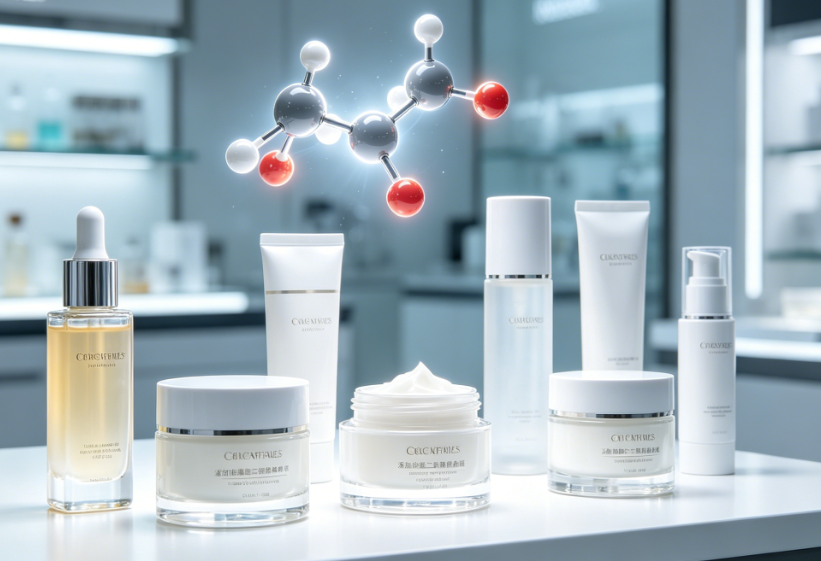
Kojic Acid Dipalmitate is integrated into serums, creams, masks, and foundations. Leading brands combine it with vitamin C, niacinamide, and hyaluronic acid for multifunctional products. A renowned Japanese brand’s brightening serum with 1% Kojic Dipalmitate achieves annual sales over 1 billion yen, while Chinese domestic brands pair it with plant extracts for sensitive skin lines, gaining positive feedback.
Despite growth prospects, the market faces challenges: intensifying regulatory scrutiny and competition from arbutin and glutathione. However, technological advancements like microencapsulation and nanoemulsion improve absorption and reduce costs. Green production via bioenzymatic synthesis also drives growth by lowering environmental impact.
Kojic Acid Dipalmitate stands out as a versatile, safe, and effective ingredient in the global beauty industry. Its unique combination of stability, efficacy, and gentleness addresses consumer demands for comprehensive skincare. As R&D unlocks new applications, it is poised to replace traditional whitening ingredients, become a staple in formulations, and lead innovation in skin brightening and anti-aging care. For brands, integrating it into product lines is a powerful way to differentiate and meet market needs.

For more than information for Kojic Acid Dipalmitate,visit //www.ruizelinbio.com/ or email address:info@ruizelinherb.com. We will reply to you as soon as possible,Thanks very much
Previous News: Unleash Your Body's Potential: The Power of L-Carnitine-L-Tartrate
Next News: A small bottle of oregano oil can be used on everything from the digestive system to the skin.


