


Ancient Wisdom, Modern Science: Rutaecarpine's Multi‑Target Health Benefits
Ancient Wisdom, Modern Science:
Rutaecarpine's Multi‑Target Health Benefits
Within the treasury of traditional Chinese medicine, Evodia rutaecarpa (Wu‑Zhu‑Yu) has been a classic medicinal herb with a long history of use, commonly prescribed for headaches, abdominal pain, postpartum bleeding, dysentery, and amenorrhea. Modern pharmacology has revealed that Rutaecarpine – one of the most important alkaloids in Evodia – has emerged as a star molecule in natural product research, owing to its broad and profound pharmacological actions.
A Multifaceted Guardian of the Cardiovascular System
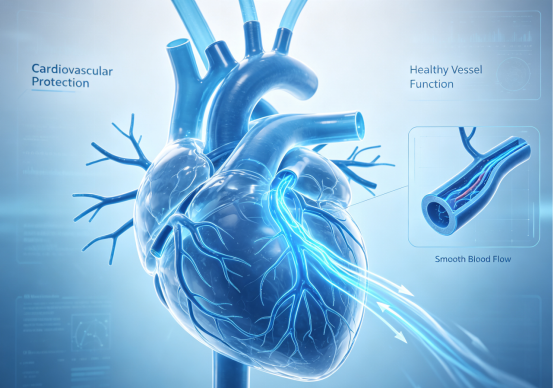
Rutaecarpine's most prominent effects are concentrated in cardiovascular protection. Studies indicate that it exerts positive inotropic and positive chronotropic effects on the heart, while also dilating blood vessels and lowering blood pressure. Its vasodilatory action is primarily mediated through the Ca²⁺–NO–cGMP pathway in endothelial cells, effectively reducing smooth muscle tone. In addition, Rutaecarpine exhibits anti‑platelet aggregation, anti‑atherosclerotic, and lipid‑lowering properties. Research suggests that Rutaecarpine may protect the cardiovascular system through synergistic multi‑target and multi‑pathway mechanisms, making it a highly promising candidate for cardiovascular disease therapy.
Anti‑inflammatory & Antioxidant: Protecting Health at the Molecular Level
Inflammation and oxidative stress are common pathological bases of many chronic diseases. Rutaecarpine demonstrates remarkable anti‑inflammatory and antioxidant activities. It has been shown to significantly inhibit the production of nitric oxide (NO), inducible nitric oxide synthase (iNOS), cyclooxygenase‑2 (COX‑2), and interleukin‑1β (IL‑1β) in LTA‑stimulated macrophages, mainly through suppression of the MAPK/NF‑κB signaling pathway. On the antioxidant side, Rutaecarpine activates the Nrf2 pathway via TRPV1 and AhR, enhancing the expression of antioxidant enzymes and protecting vascular endothelial cells from oxidative stress‑induced apoptosis.
Notably, a recent study in 2025 performed structural rearrangement of the rigid backbone of Rutaecarpine, synthesizing 33 derivatives. Among them, compound 5Ci outperformed the clinical anti‑inflammatory drug indomethacin in counteracting inflammation‑induced ROS accumulation and cellular damage.
Metabolic Regulation: Combating Obesity and Fatty Liver
Metabolic diseases have become a major global public health challenge, and Rutaecarpine's potential in metabolic regulation is equally exciting. Research has found that Rutaecarpine activates the AMPK/PGC‑1α pathway, promoting thermogenesis in brown and beige adipocytes, thereby counteracting high‑fat diet‑induced obesity. Chronic Rutaecarpine treatment significantly reduces weight gain and improves insulin sensitivity. Moreover, it significantly lowers total cholesterol, triglycerides, and LDL‑cholesterol in type‑2 diabetic obese rats, alleviates inflammation, and ameliorates pathological changes in the kidneys, liver, and pancreas. In a mouse model of metabolic‑associated fatty liver disease (MAFLD), Rutaecarpine treatment markedly reduced hepatic steatosis and lipid accumulation.

Neuroprotection: New Insights for Brain Health
Rutaecarpine's neuroprotective effects have attracted increasing attention in recent years. In ischemic stroke studies, Rutaecarpine preconditioning significantly reduced neuronal death, decreased cerebral infarction volume, and improved neurological deficits. The mechanisms involve regulation of MAPK‑mediated MMP pathways and alleviation of blood‑brain barrier disruption. In terms of cognitive function, Rutaecarpine enhances cognitive performance by activating the AMPK/PGC1α pathway to balance mitochondrial function. Furthermore, in traumatic brain injury models, Rutaecarpine counteracts oxidative damage through the PGK1/KEAP1/NRF2 signaling pathway. These findings provide a solid theoretical basis for the application of Rutaecarpine in neurodegenerative diseases and brain injury therapy.
Broad Prospects for Application
Given its multi‑target, multi‑pathway pharmacological profile, Rutaecarpine's potential goes far beyond the above. Studies have also demonstrated its antitumor activity – in colorectal cancer cells, it exerts anti‑proliferative and pro‑apoptotic effects by inhibiting the Wnt/β‑catenin pathway; in gastric mucosal protection, Rutaecarpine protects against ethanol‑induced gastric injury; and it also exhibits antidepressant, analgesic, and anti‑inflammatory activities among others.
As the understanding of Rutaecarpine's mechanisms deepens, and with continuous progress in structural optimization and derivative development, this natural compound originating from an ancient Chinese herb is gradually moving from the laboratory to a broader application arena – in functional foods, dietary supplements, and innovative drug development, Rutaecarpine shows truly promising value.

Rutaecarpine is a precious gift from nature and a vivid example of the convergence of traditional wisdom and modern science. It not only carries millennia of medicinal experience but also, with solid scientific evidence, injects new vitality into contemporary health endeavours.


