


A comprehensive analysis of DHA algal oil!
2025-12-11
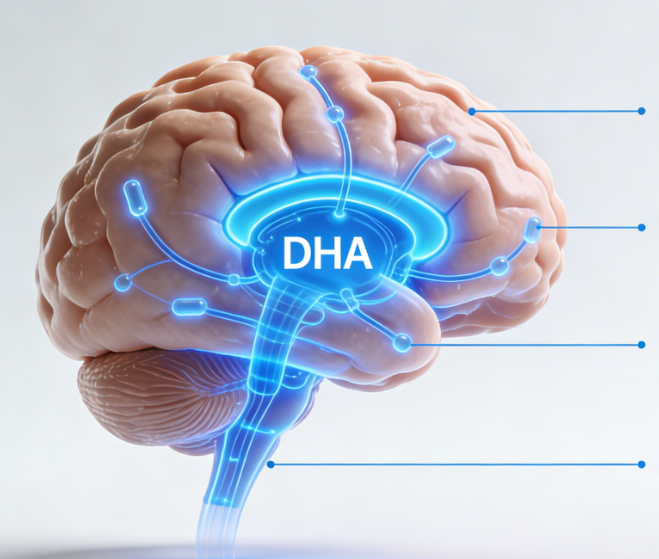
DHA, docosahexaenoic acid, commonly known as "brain gold," is a vital polyunsaturated fatty acid for the human body and an important member of the Omega-3 unsaturated fatty acid family. DHA is a key element for the growth and maintenance of nerve cells and a crucial component of the brain and retina. It constitutes up to 20% of the human cerebral cortex and has the largest proportion (approximately 50%) in the retina of the eye. It is essential for the intellectual and visual development of infants. DHA algal oil is extracted from marine microalgae, bypassing the food chain, making it relatively safer, and its EPA content is very low.

Algae can synthesize DHA through fermentation. Therefore, with the development of modern technology, seaweed is cultivated in large stainless steel fermentation tanks, which are commonly used in the pharmaceutical, food, and biotechnology industries. Adhering to Good Manufacturing Practices (cGMP), the entire production process is controlled to ensure that the algae are clean, environmentally friendly, and uncontaminated, thus guaranteeing the production of safe, efficient, and pollution-free high-quality DHA.
An interesting phenomenon is that while most people believe fish is the primary source of DHA, the truth is that fish contain DHA because they consume DHA-rich algae. The DHA from the algae accumulates in the fish's body through the food chain. Therefore, directly consuming algal DHA is not only more direct but also avoids the fishy smell of fish oil.
Tip: Algal oil DHA is relatively more stable and safer, making it suitable for pregnant women, postpartum women, and infants. Due to its higher price, most nutritional supplements do not contain sufficient amounts of DHA. Consumers should carefully read the product instructions and consider their own DHA requirements when making their choices.
Tip: Algal oil DHA is relatively more stable and safer, making it suitable for pregnant women, postpartum women, and infants. Due to its higher price, most nutritional supplements do not contain sufficient amounts of DHA. Consumers should carefully read the product instructions and consider their own DHA requirements when making their choices.
DHA - Brain Development Requires More Than Just DHA
For a long time, many people have believed that supplementing babies or pregnant women with DHA (docosahexaenoic acid) will make their babies smarter. However, a baby's brain development requires more than just DHA. As early as 2003, the authoritative Chinese pediatric journal, *Clinical Pediatrics*, published a paper titled "Nutrition and Children's Brain Development and Function," which clearly outlined the eight essential nutrients for children's brain development: protein, taurine, fatty acids, iron, zinc, iodine, selenium, and B vitamins. Protein, iron, iodine, selenium, and B vitamins are relatively easy to obtain from our diet. Taurine, fatty acids, and zinc are relatively less readily available.
Functions of DHA
1. For Infants and Young Children: Algae are high in DHA, and DHA extracted from algae oil is most easily absorbed by infants and young children, effectively promoting the development of their retina and brain.
Single-celled algae in the ocean can synthesize DHA themselves.
Most deep-sea fish obtain their DHA from consuming algae.
2. For the Brain: Professor Croft of the British Brain Nutrition Institute first revealed the secrets of DHA: DHA is one of the essential substances for human brain development and growth.
DHA accounts for approximately 97% of the omega-3 fatty acids in the brain. The human body must ensure a sufficient supply of various fatty acids to maintain the normal function of various tissues. Among these fatty acids, linoleic acid (ω6) and linolenic acid (ω3) cannot be synthesized by the human body and must be obtained from food; these are called essential fatty acids. As a fatty acid, DHA has a more significant effect on enhancing memory and thinking ability, and improving intelligence. Epidemiological studies have found that people with higher DHA levels in their bodies have stronger psychological resilience and higher intelligence development indices.
3. For the Eyes
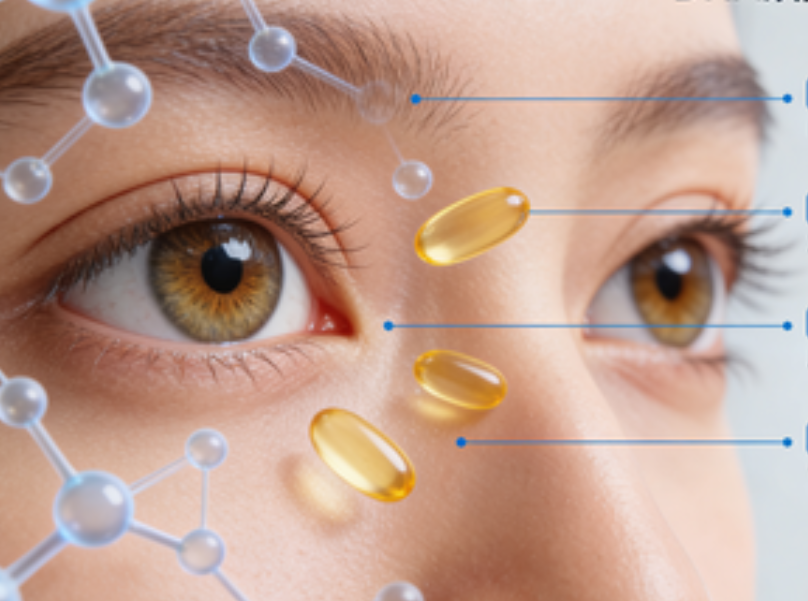
DHA accounts for 60% of the total fatty acids in the retina. In the retina, each rhodopsin molecule is surrounded by 60 phospholipid molecules rich in DHA.
DHA accounts for 60% of the total fatty acids in the retina. In the retina, each rhodopsin molecule is surrounded by 60 phospholipid molecules rich in DHA.
This enhances the visual acuity of retinal pigment molecules.
It aids in neurotransmission in the brain.
Studies have shown that the difference in visual acuity between babies who consistently consume sufficient DHA and those who do not is equivalent to being able to read one line down on a standard eye chart.
Sufficient DHA supplementation promotes early visual development in babies, helping them to understand the world earlier; it also stimulates brain development, allowing the window to intellectual awakening to guide babies towards greater intelligence.
4. For Pregnant Women
It's essential to know this even before birth—the benefits of DHA for pregnant women. Expectant mothers supplementing with DHA in advance not only has a significant impact on fetal brain development but also plays a crucial role in the maturation of retinal photoreceptor cells. During pregnancy, consuming foods rich in alpha-linolenic acid can increase the level of alpha-linolenic acid. The alpha-linolenic acid in the mother's blood is used to synthesize DHA, which is then transported to the fetal brain and retina, improving the maturity of nerve cells there.

Experts say that because the conversion rate of DHA from daily diet is very low, additional DHA supplementation is necessary. For premature infants, especially low birth weight infants (birth weight <1500g), who are particularly sensitive to essential fatty acid deficiencies and receive relatively insufficient DHA from their mothers, long-term, appropriate DHA supplementation can improve fatty acid nutritional status, visual function, and learning ability, and has a more significant promoting effect on their development. Therefore, DHA supplementation during pregnancy can optimize the phospholipid composition of the pyramidal cells in the fetal brain. Especially after the fetus is five months old, artificial stimulation of the fetus's hearing, vision, and touch can cause the neurons in the sensory center of the fetal cerebral cortex to grow more dendrites, which requires the mother to simultaneously supply the fetus with more DHA.
Sources of DHA
Breast Milk
Generally, breast milk contains approximately 0.3% DHA of its total fatty acids, making it the best source of DHA. However, the DHA content in breast milk is closely related to the mother's diet and nutritional status. Whether the DHA in breast milk meets the baby's needs depends on the baby's development. Sufficient DHA intake by the mother ensures better nutrition for the baby's brain and vision.
Generally, breast milk contains approximately 0.3% DHA of its total fatty acids, making it the best source of DHA. However, the DHA content in breast milk is closely related to the mother's diet and nutritional status. Whether the DHA in breast milk meets the baby's needs depends on the baby's development. Sufficient DHA intake by the mother ensures better nutrition for the baby's brain and vision.
Marine Microalgae (Algal Oil DHA)
Research has found that although some marine fish can synthesize n-3 polyunsaturated fatty acids such as DHA and EPA, the DHA and EPA accumulated in their bodies mainly come from their food. Marine microorganisms, the primary producers in the marine food chain, are the original producers of n-3 polyunsaturated fatty acids. Therefore, finding new resources of n-3 polyunsaturated fatty acids in marine microorganisms has gradually become a new research hotspot. The concepts of "microbial oil" and "single-cell oil" have begun to emerge.
Currently, various marine microorganisms rich in DHA and EPA have been isolated, mainly some marine fungi and microalgae. Compared with fish oil, algal oil DHA has some advantages that fish oil cannot match. These are all-natural, green foods free of heavy metal residues, purely vegetarian, without a fishy smell, and are sustainable renewable resources with reliable sources.
Indirect Sources: The DHA precursor (alpha-linolenic acid) is widely found in nuts and vegetable oils, such as flaxseed oil, sunflower seeds, and peanuts. It can be partially converted into DHA in the body, thus being utilized by the body. However, the conversion rate of alpha-linolenic acid is still unclear. What is certain is that alpha-linolenic acid from nuts and other oils is just as important as direct DHA supplementation; both are indispensable sources for the body to obtain sufficient DHA.

Groups requiring supplementation:
1. Pregnant women;
2. Breastfeeding mothers;
3. Infants and young children;
4. Growing children;
5. Pregnant women;
6. Students preparing for the college entrance examination;
7. Middle-aged people experiencing memory decline;
8. Postoperative patients and patients with cerebral thrombosis.
Previous News: Unveiling the Magic of Gingerol: Embrace a Natural and Healthy Lifestyle
Next News: Agar-Nature's Versatile Gelling Agent


