

The Texture Masters of Food Additives: An Analysis of the Efficacy of Phosphates and Emulsifiers
In the complex world of modern food production, a suite of functional ingredients works behind the scenes to ensure the safety, quality, texture, and shelf-life of countless products. For food manufacturers, exporters, and importers, understanding these ingredients is crucial for product development, compliance, and clear communication. This article delves into six important and versatile food additives: E340, E451, E331, E452, E471, and E472e, explaining their functions and widespread applications.
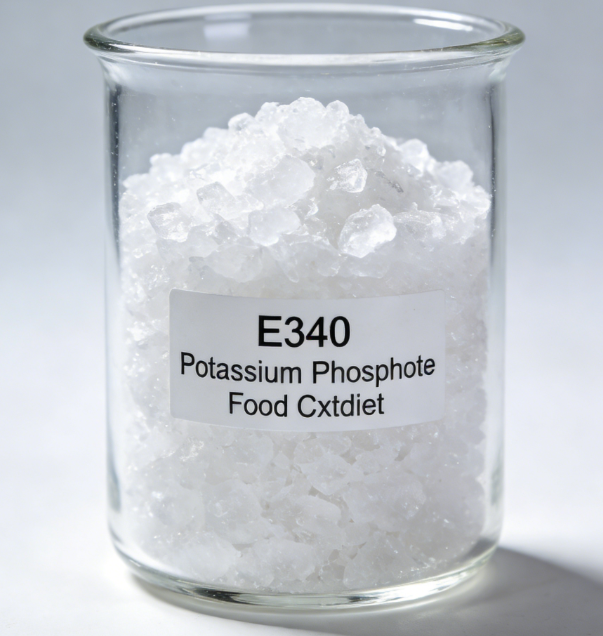
E340 - Potassium Phosphates: The Versatile Regulator
Function & Benefits:
Potassium phosphates refer to a series of salts derived from phosphoric acid, commonly including mono-, di-, and tri-potassium phosphate. They serve multiple technological functions:
-
pH Regulation & Buffering: They effectively stabilize and control the acidity or alkalinity of a food system, preventing unwanted pH shifts during processing or storage, which is critical for flavor, color, and stability.
-
Emulsification & Protein Interaction: In processed meats and cheeses, they help solubilize proteins, improving water-binding capacity. This leads to enhanced yield, better texture (juiciness in meats, consistency in cheese), and reduced cooking loss.
-
Mineral Supplement: They are a source of essential minerals—potassium and phosphorus—and can be used to fortify foods.
-
Sequestrant: They bind to metal ions that can catalyze oxidation, thus acting as a preservative aid.
-
Common Applications:
-
Processed Meats: Sausages, hams, and poultry products for moisture retention and texture.
-
Dairy Products: Processed cheeses (for smooth melting and sliceability), evaporated milk (prevention of coagulation).
-
Beverages: As an acidity regulator and electrolyte source in sports drinks.
-
Cereals & Bakery Products: As a leavening agent and dough conditioner.
-

E451 - Triphosphates (Sodium and Potassium Triphosphate): The Texture Enhancer
Function & Benefits:
Triphosphates are powerful, chain-like phosphate salts. Their primary role is as a water-binding agent and protein modifier.
-
Improved Water-Holding Capacity: They dramatically increase the amount of water proteins can bind, crucial for meat and seafood products. This improves tenderness, juiciness, and yield.
-
Protein Dispersion & Gel Formation: They help disperse protein molecules, leading to the formation of stable gels in products like surimi (imitation crab) and processed fish fillets, providing a firm, elastic texture.
-
Sequestrant & Synergist: They bind metals and work synergistically with other preservatives.
Common Applications:
-
Fish & Seafood Processing: Especially for frozen fillets and surimi-based products to prevent drip loss and texture degradation.
-
Cured & Cooked Meats: In hams, luncheon meats, and sausages.
-
Poultry: To retain moisture in injected or tumbled breast fillets.
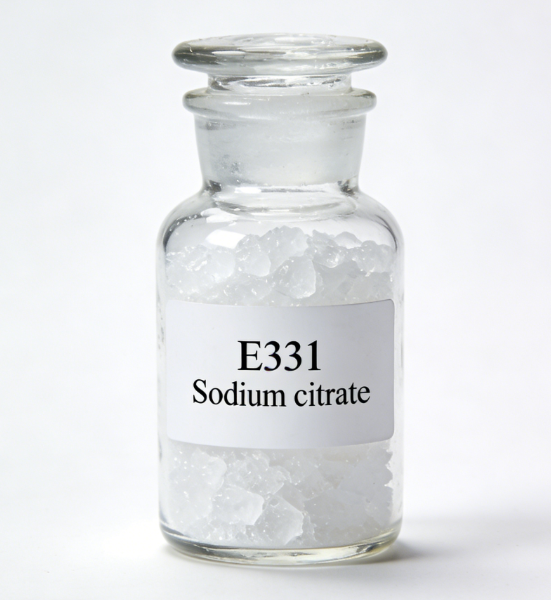
E331 - Sodium Citrates: The Mild Acidulant and Chelator
Function & Benefits:
Sodium citrates are the sodium salts of citric acid, a natural acid found in citrus fruits. They are valued for their mild, clean, salty-sour taste and multiple functions:
-
Acidity Regulator & Buffer: They provide a controlled tartness and maintain a stable pH, gentler than direct acid addition.
-
Emulsifying Salt: This is their most significant role in dairy. In processed cheese, they bind calcium ions, disrupting the protein structure and allowing casein proteins to emulsify fat and water smoothly. This prevents fat separation and gives a uniform, meltable consistency.
-
Flavor Enhancer & Antioxidant Synergist: They can enhance the perception of other flavors and boost the effectiveness of natural antioxidants like ascorbic acid.
-
Chelating Agent: They bind trace metals, slowing rancidity and color changes.
-