


Application and Model Selection of Hydroxypropyl Methylcellulose in Cosmetics
2026-05-29
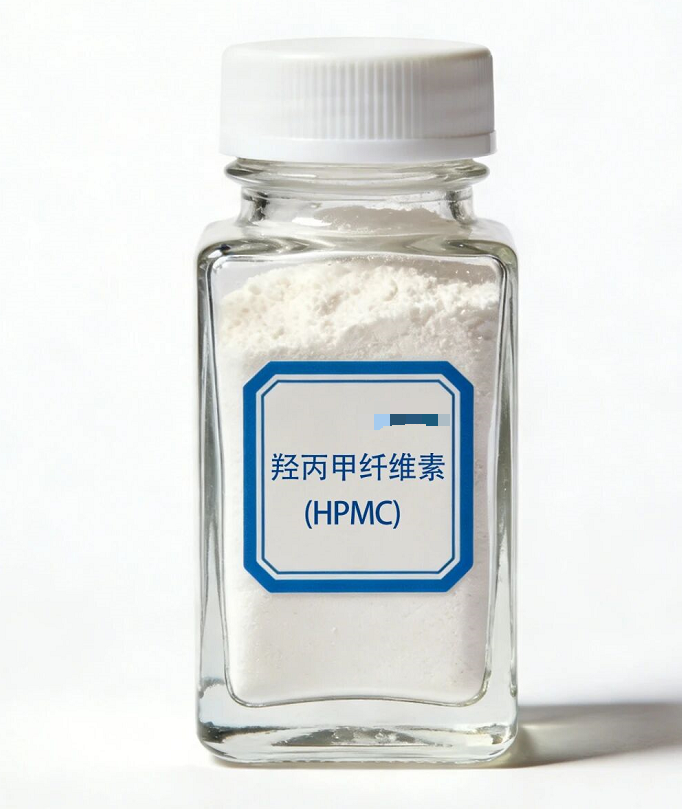
Hydroxypropyl Methylcellulose (HPMC)
Non-ionic cellulose ether | Thickening · Stabilizing · Film-forming · Moisturizing · Sensory conditioning
Hydroxypropyl Methylcellulose (HPMC) is a widely used non-ionic cellulose ether in cosmetics. It features thickening, stabilizing, film-forming,
moisturizing and sensory conditioning properties, and is extensively used in skincare, color cosmetics, personal care and sun care products.
I. Core Functions & Mechanisms
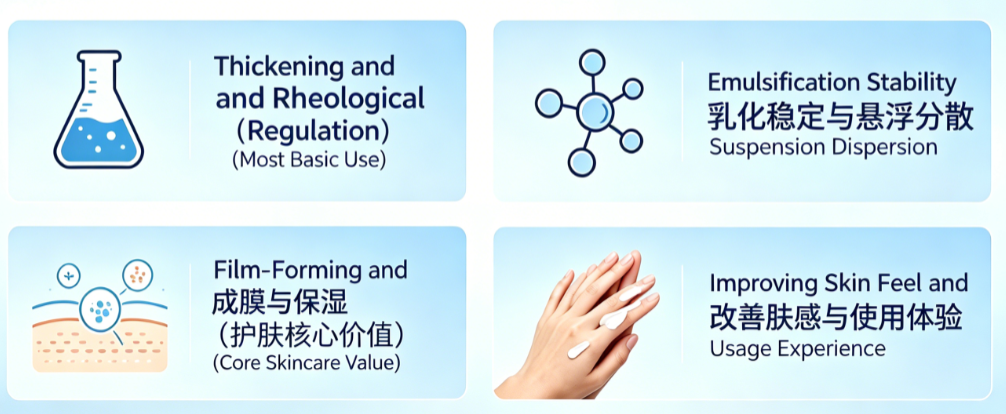
1. Thickening & Rheology Modification Primary Application
- It dissolves in water to form a 3D network structure. A low dosage of 0.1%–2.0% can significantly increase viscosity.
- It imparts shear-thinning property to formulations: the product flows easily under extrusion, stays intact without dripping at rest, and applies smoothly on skin.
- It delivers excellent resistance to high temperature, acid and alkali. Its viscosity remains stable under heat, outperforming xanthan gum and other thickeners.
2. Emulsification Stabilization, Suspension & Dispersion
- It stabilizes oil-in-water (O/W) emulsions, preventing phase separation, layering and sedimentation to extend shelf life.
- It suspends pigments, pearlescent powders and functional actives such as Vitamin C and Niacinamide, maintaining a homogeneous system.
- Compatible with clear formulations, it enhances clarity and gloss while preventing cloudiness.
3. Film-forming & Moisturizing Key Benefits for Skincare
- It forms a breathable protective film after drying without clogging pores, reducing Transepidermal Water Loss (TEWL) by approximately 25%.
- The soft and flexible film locks in moisture and refines skin texture, leaving no heavy or stuffy feeling associated with silicone-based ingredients.
- It enables sustained release of active ingredients to prolong efficacy and mitigate skin irritation.
4. Sensory Improvement & Enhanced Application Experience
- It creates a smooth, non-tacky skin feel upon application and can partially replace synthetic thickeners.
- For skincare: improves spreadability and absorption of lotions and creams. For color cosmetics: helps foundation and BB cream adhere evenly to skin.
- For personal care products: produces fine, stable foam; leaves skin moisturized without tightness after rinsing.
II. Specific Applications in Cosmetics
Skincare Products
- Gels & Serums: Ideal for clear gels and lightweight serums; provides thickening effect without heaviness, along with moisturizing and film-forming benefits.
- Lotions & Creams: Stabilizes emulsions, optimizes skin feel and locks in moisture to strengthen the skin barrier.
- Face Masks: Facilitates film formation and easy peeling for peel-off masks; thickens mask serums for moisturization and anti-dripping performance.
- Cleansers: Stabilizes foam for amino acid-based cleansers, enhances mildness, reduces irritation and leaves skin soft after washing.
Color Cosmetics
- Foundation & BB Cream: Provides thickening and stabilization, ensures easy application, long wear and good adherence.
- Mascara & Eyebrow Gel: Regulates viscosity to prevent caking and boost adhesion.
- Primer: Blurs pores via film formation and prolongs makeup wear.
Personal Care Products
- Shampoo & Conditioner: Thickens formulations, stabilizes foam, reduces static electricity and eases hair combing.
- Body Wash: Optimizes foam quality, delivers mild moisturization and prevents post-wash dryness.
- Hair Styling Gel: Offers light to medium hold without stiffness or stickiness.
Sun Care Products
- Dispersion aid: Uniformly disperses UV filters such as titanium dioxide (TiO₂) and zinc oxide (ZnO) and avoids particle agglomeration.
- Film formation: Builds a uniform protective film to boost sun protection and water resistance.
III. Typical Dosage & Grade Selection
| Product Category | Typical Dosage | Recommended Grade |
|---|---|---|
| Skincare gels | 0.5% – 1.5% | Grade SH-K4M / SH-E50 (medium to low viscosity) |
| Lotions & creams | 0.2% – 0.8% | Grade SH-K15M (relatively high viscosity) |
| Mask serums | 0.3% – 1.0% | Grade SH-K4M / SH-K15M (selected based on viscosity requirements) |
| Color cosmetics | 0.5% – 2.0% | Grade SH-K4M / SH-K15M (selected based on viscosity requirements) |
| Personal care products | 0.1% – 0.5% | Grade SH-E50 (low viscosity) |
| Sun care products | 0.4% – 1.0% | Grade SH-K4M (medium viscosity) |
IV. Comparison with Other Thickeners
🔹 HPMCHeat-stable, shear-thinning, clear gels, film-forming & non-ionic, broad compatibility.
🔸 Xanthan GumPseudoplastic but less heat/acid resistant vs HPMC; may cause cloudiness.
🔹 CarbomersRequire neutralization, electrolyte sensitivity; HPMC works in wider pH without neutralization.
🔸 Guar Gum / CMCLess film-forming; lower tolerance to salts and temperature.
Compared to traditional thickeners, HPMC provides superior thermal stability, electrolyte tolerance, and unique film-forming moisturization, making it the preferred choice for
multifunctional cosmetic systems.

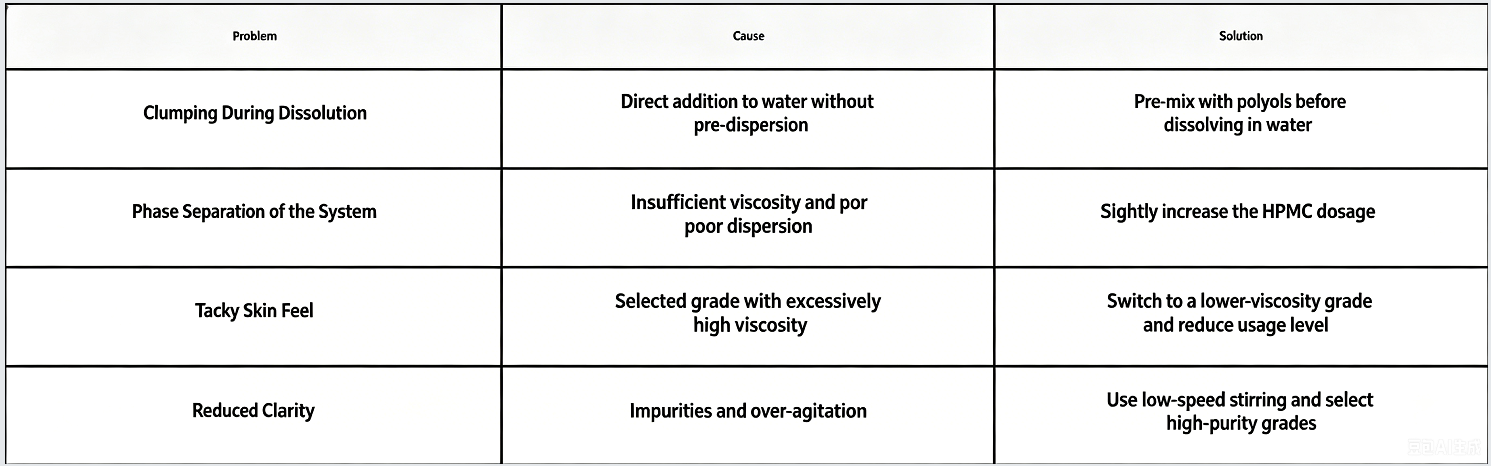
V. Common Problems & Solutions
✅ HPMC, with its versatility, high stability, and pleasant skin feel, has become an indispensable key ingredient in cosmetic formulations. In terms of safety, it is non-allergenic and non-comedogenic, making it especially suitable for modern skincare and makeup products, as well as baby products, that seek gentleness, stability, and a refreshing feel.
Hydroxypropyl Methylcellulose (HPMC) — multifunctional cellulose ether for modern cosmetic formulations.
Previous News: ECM Skincare: Rewrite the Rules of Youthful, Resilient Ski
Next News: Application and Value of Zinc Citrate in Health Supplements


