

The Rise of Whey Protein 90 A Complete Guide to the Hottest Protein Ingredient
Whey Protein 90%:
The Rising Star of Modern Nutrition
1. What Is Whey Protein 90%?
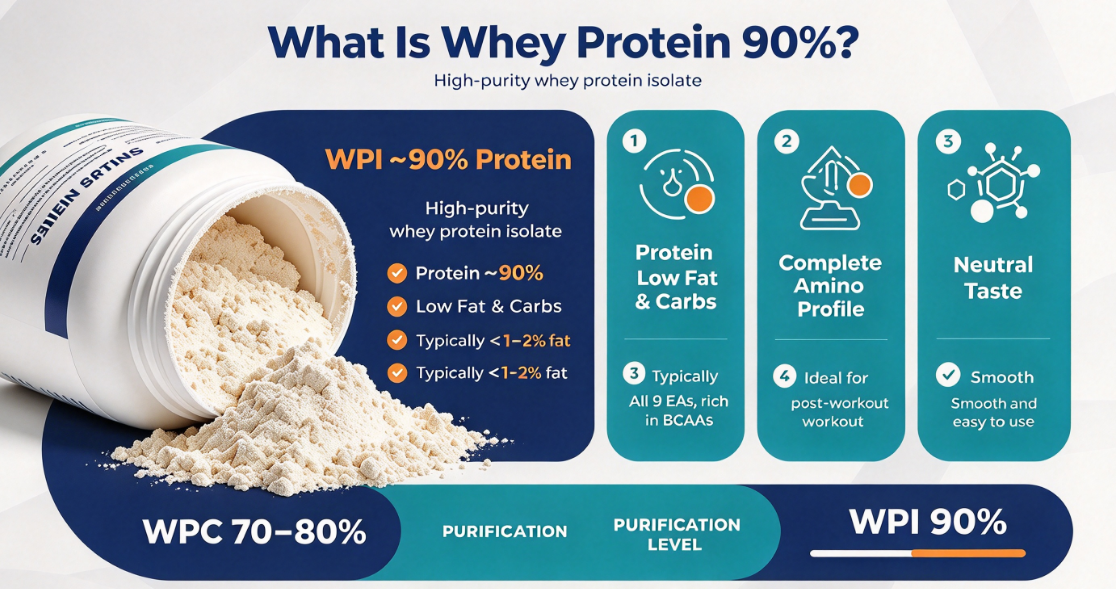
Whey protein 90% refers to whey protein isolate (WPI) with a protein content of approximately 90% on a dry basis. It is one of the purest forms of whey protein commercially available.
- Protein content: ~90% (vs. 70–80% for whey protein concentrate)
- Low in fat & carbohydrates: typically less than 1–2% fat and very low lactose
- Complete amino acid profile: all nine essential amino acids, rich in BCAAs, especially leucine
- Fast absorption: rapidly digested, ideal for post-workout nutrition
- Neutral taste & smooth texture: easy to formulate into various products
The “90%” designation distinguishes it from whey protein concentrate (WPC 70–80%) and reflects the higher degree of purification achieved through advanced processing.
2. Where Does It Come From?
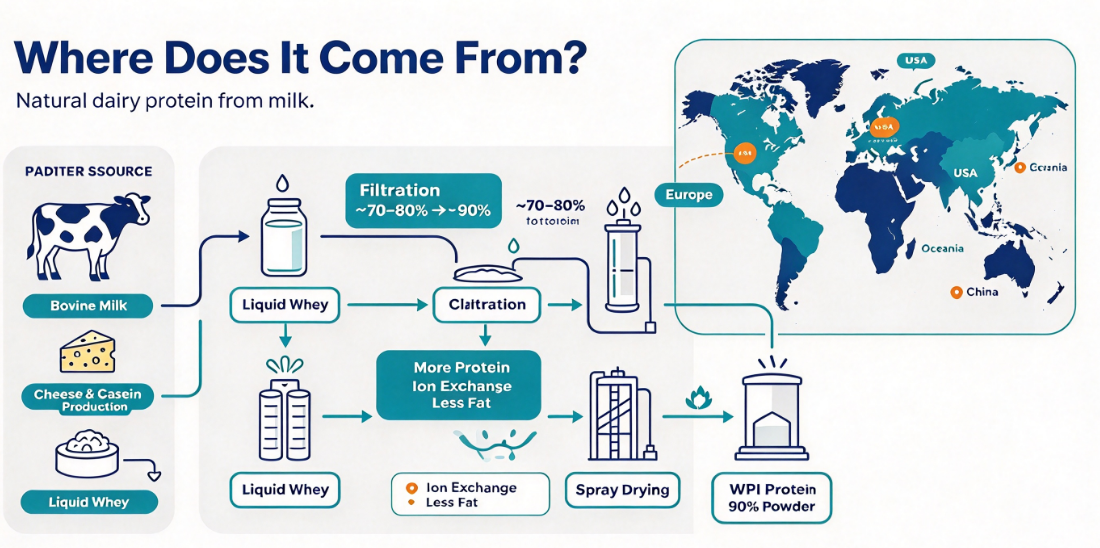
Raw material source: Whey is a by-product of cheese and casein production from bovine milk. It is a natural dairy-derived protein.
Production process:
- Cheese/casein manufacturing produces liquid whey
- Clarification and separation remove fat and casein fines
- Filtration — typically microfiltration, ultrafiltration, and diafiltration — concentrates and purifies the protein
- Ion exchange chromatography (in some processes) further refines the protein
- Spray drying converts the purified liquid into powder
The advanced filtration steps are what raise protein purity from ~70–80% (WPC) to ~90% (WPI) while reducing lactose, fat, and ash.
Major producing regions: Europe (Germany, France, Netherlands, Poland), the United States, and Oceania (New Zealand, Australia) — regions with large dairy industries. China is a major importer and increasingly a processor of whey protein ingredients.
3. Hot-Selling Countries and Regions
Whey protein 90% is a globally traded ingredient, but demand is strongest in the following markets:
| Region | Market Characteristics |
|---|---|
| United States | Largest sports nutrition market; high demand from gym culture, supplement brands, and functional food manufacturers |
| China | Rapidly growing market driven by fitness awareness, aging population nutrition needs, and expanding supplement e-commerce |
| Europe (Germany, UK, France, Netherlands) | Strong clean-label trend, sports nutrition, and clinical nutrition demand |
| Japan & South Korea | High awareness of protein supplementation, aging society nutrition products, and premium functional foods |
| Australia & New Zealand | Both major producers and consumers; strong sports nutrition culture |
| Southeast Asia (Thailand, Vietnam, Indonesia) | Emerging markets with rising middle-class health consciousness |
| Middle East (UAE, Saudi Arabia) | Growing sports nutrition and clinical nutrition demand |
Why these markets are hot: rising fitness culture, aging populations seeking high-quality protein, clean-label consumer preferences, and the expansion of e-commerce supplement sales.
4. Application Scenarios
Whey protein 90% is used across a wide range of industries and product categories:
Sports Nutrition
- Protein powders & shakes for athletes, bodybuilders, fitness enthusiasts
- Post-workout recovery drinks — fast absorption supports muscle repair
- Protein bars and RTD (ready-to-drink) beverages
- BCAA and EAA formulations — WPI 90 as a premium protein base
Clinical & Medical Nutrition
- High-protein supplements for malnutrition, sarcopenia, or recovery needs
- Senior nutrition — easy-to-digest, high-quality protein for the elderly
- Post-surgery and wound-healing nutrition
- Low-lactose therapeutic formulas — suitable for mild lactose intolerance
Infant & Maternal Nutrition
- Infant formula — whey protein is a key component mimicking breast milk
- Follow-on and growing-up formulas
- Maternal nutrition products
Functional Foods & Beverages
- Protein-fortified beverages, yogurts, and desserts
- High-protein baked goods and snacks
- Meal replacement shakes
- Coffee creamers and instant drinks with added protein
Weight Management
- High-protein, low-calorie diet products — protein supports satiety and muscle preservation
- Meal replacement and ketogenic-friendly products
Food Industry Ingredients
- Protein fortification of processed foods
- Emulsification and texture enhancement in certain formulations
- Clean-label protein sources for premium product positioning
5. Why Is It So Popular Right Now?
Several converging trends explain the surge in demand:
- Protein megatrend — global consumers increasingly prioritize protein intake for fitness, weight management, and healthy aging
- Clean label movement — consumers prefer high-purity, low-additive ingredients
- Low-lactose demand — WPI 90 suits lactose-sensitive consumers better than WPC
- Aging population — senior nutrition requires high-quality, easily digestible protein
- E-commerce expansion — online supplement sales have lowered barriers to entry in emerging markets
- Sports nutrition mainstreaming — fitness culture has spread beyond athletes to general consumers
6. What to Look For When Buying
- Protein content: ≥90% on a dry basis
- Ingredient list: minimal additives, no unnecessary fillers
- Third-party testing: certificates of analysis (COA), heavy metal and microbial testing
- Source and process: reputable dairy origins, documented filtration methods
- Lactose and fat content: lower is better for purity-sensitive applications
For more information on high-quality whey protein products and ingredients, please visit:
Ruizelin: https://www.ruizelin.com